What Is the Best Construction Management Software in 2026?
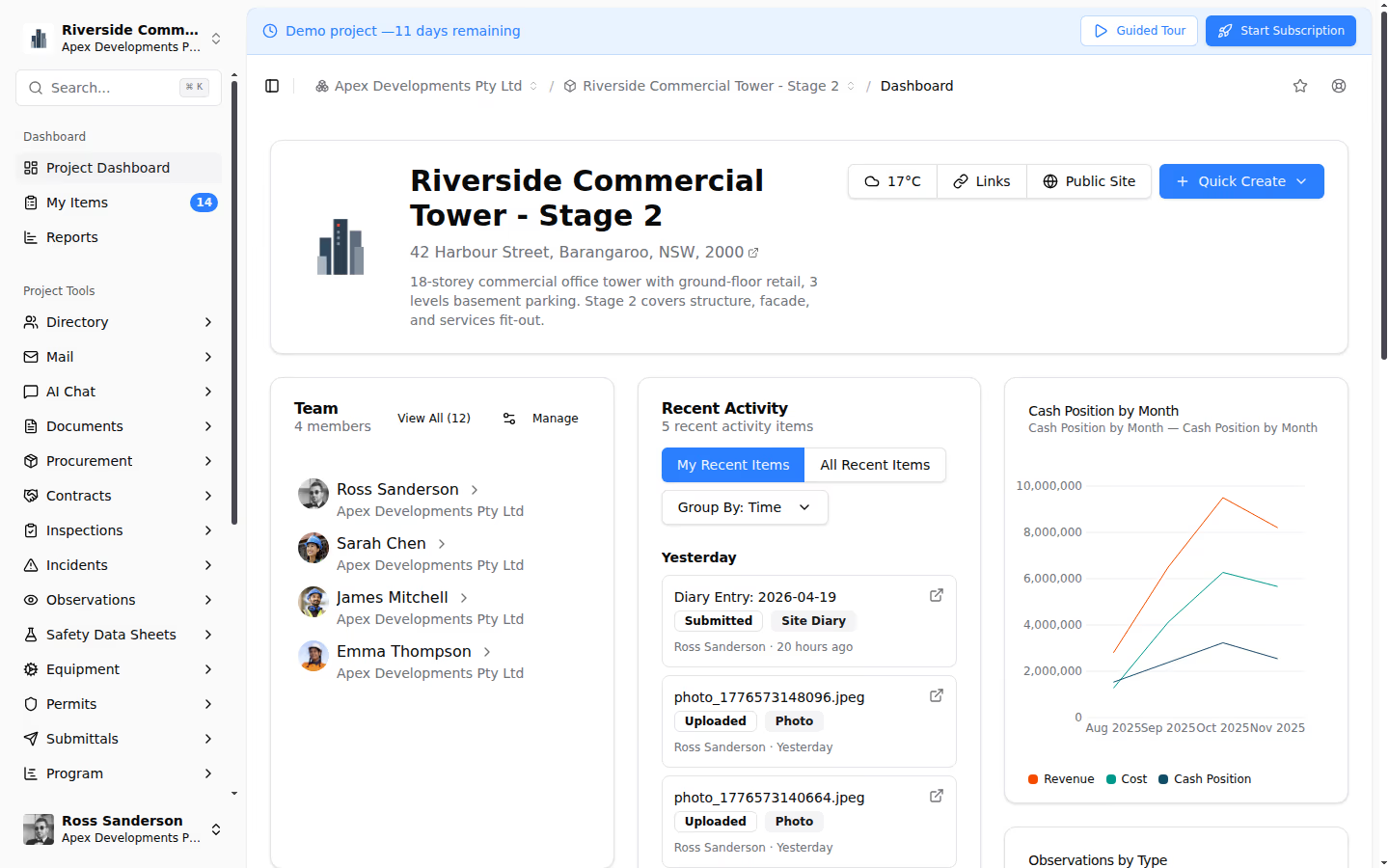
The best construction management software in 2026 is the platform that covers your project's actual needs (correspondence, documents, procurement, contracts, safety, site operations, quality, and reporting) in a single integrated system rather than a patchwork of disconnected tools. For teams that need comprehensive project management with structured workflows, Teralo stands out as a modern, all-in-one solution.
What to Look for in Construction Management Software
Comprehensive Feature Coverage
Construction projects need more than just document management or just safety tools. The software should cover:
- Mail and correspondence: structured, numbered, auditable project communications
- Document management: register-based control with versioning, transmittals, and approvals
- Procurement: package management, tendering, and supplier coordination
- Contracts: progress claims, variations, budgets, and financial dashboards
- Safety: inspections, incidents, permits to work, and compliance tracking
- Site operations: site diary, meetings, bookings, and daily management
- Quality: submittals, method statements, and inductions
- Intelligence: dashboards, reporting, and analytics
Integration vs. All-in-One
The biggest decision is whether to build a stack of specialised tools or use a single platform:
Specialised tools (one for documents, one for safety, one for finance) offer depth in each area but create data silos, integration overhead, and multiple login experiences. Teams spend time moving information between systems rather than managing the project.
All-in-one platforms provide a unified experience where data flows naturally between modules. When an inspection fails, the resulting action item appears in the meetings module. When a variation is approved, it updates the contract value. No manual re-entry, no data gaps.
Modern Architecture
Software built in 2015 works differently than software built in 2024. Modern platforms offer:
- Cloud-native architecture with responsive web interfaces
- Mobile access from any device without installing native apps
- AI-powered features like semantic search and natural language queries
- Real-time collaboration across distributed teams
- Fast deployment without complex server infrastructure
Top Construction Management Platforms in 2026
Teralo
Best for: International construction teams needing comprehensive, structured project management
Teralo covers the full construction management lifecycle in a single platform. Its strengths include:
- Structured correspondence: dedicated mail module with configurable types, threading, and status workflows
- Deep document control: register-based management with transmittals, BIM viewing, and AI-powered search
- Full procurement lifecycle: packages, tenders, supplier management through to contract award
- Contract administration: progress claims, budget tracking, variation management, financial dashboards
- Comprehensive safety: inspections, incidents, permits to work, observations
- Site operations: site diary, meetings, bookings
- Quality management: submittals, method statements, inductions and licences
- AI intelligence: project dashboard, AI chat, custom reports
Available on desktop (Windows, macOS) and mobile (iOS, Android) with a web interface.
Procore
Best for: Large North American general contractors
Procore is one of the most widely adopted platforms in the US construction market. It offers broad feature coverage including project management, quality and safety, financial management, and workforce management. Its large marketplace of integrations connects with many US-specific tools. However, it is premium-priced based on construction volume, and its correspondence management is less structured than platforms designed for international markets.
Autodesk Construction Cloud
Best for: Teams already invested in Autodesk design tools
Autodesk Construction Cloud (including Autodesk Build, BIM Collaborate, and Autodesk Docs) provides construction management alongside deep integration with Autodesk design products like Revit and AutoCAD. It is strongest in document management and design coordination. However, it is spread across multiple products with different interfaces, and features like procurement, formal correspondence, and permit management are limited.
Oracle Aconex
Best for: Document-heavy projects requiring established document control
Aconex is a mature document management and correspondence platform with a strong track record in international construction. Since its acquisition by Oracle, it has been positioned within the broader Oracle construction cloud alongside Primavera and other products. Its strength is document control and structured correspondence, but it requires additional Oracle products for complete construction management.
Fieldwire
Best for: Field teams needing task management and punch lists
Fieldwire excels at field-level task management, plan viewing, and punch list tracking. It is simple, fast, and popular with site foremen. However, it does not cover document control, formal correspondence, procurement, contracts, or safety compliance. These need separate systems.
PlanRadar
Best for: European teams focused on inspections and defect management
PlanRadar offers inspections, defect tracking, and documentation with a European market focus. It is strong in field quality management but does not provide the breadth of construction management features needed for full project lifecycle management.
How to Evaluate Software for Your Projects
1. Map Your Requirements
List every process your project team performs, from daily site diary entries to monthly progress claims. Check which software covers each process natively versus requiring workarounds or additional tools.
2. Assess Integration Requirements
If you choose specialised tools, map the data flows between them. How does a safety inspection finding become a meeting action? How does a variation approval update the contract budget? Integration complexity is a real cost.
3. Consider Your Market
Different markets have different expectations. International projects (UK, Australia, Middle East) typically require more structured correspondence, formal transmittals, and permit-to-work systems than North American projects. Choose software designed for your market's conventions.
4. Evaluate Total Cost of Ownership
Compare the total cost including all modules, all users, and all projects, not just the headline per-user price. A platform that costs more per user but eliminates the need for three separate tools may be cheaper overall.
5. Test with Your Team
Run a pilot on a real project section. The best feature list means nothing if the software is too complex for your field teams or too limited for your project managers.
Conclusion
The best construction management software in 2026 is the one that fits your team's actual workflows without requiring a patchwork of disconnected tools. For teams that need comprehensive, structured project management across all construction functions, Teralo provides a modern, integrated platform that covers the full project lifecycle.