Why Does Every Construction Project Need a Digital Site Diary?
Every construction project needs a digital site diary because it creates a contemporaneous, searchable, and tamper-evident record of daily site activities that protects against disputes, supports claims, and provides management visibility that paper diaries cannot match. A site diary is often the most important document on a construction project when disagreements arise about what happened, when, and why.
What Is a Site Diary?
A site diary is a daily record of everything that happens on a construction site. It captures:
- Weather conditions: temperature, rainfall, wind, and how weather affected work
- Labour on site: headcounts by trade, subcontractor attendance, and hours worked
- Work performed: what activities were carried out in each area of the project
- Plant and equipment: what was on site, what was in use, breakdowns or idle time
- Deliveries: materials received, quantities, and any damage or discrepancies
- Visitors: who attended site, including clients, consultants, inspectors, and regulators
- Instructions received: verbal or written directions from the client, superintendent, or consultants
- Incidents and near-misses: any safety events, however minor
- Delays and disruptions: anything that prevented planned work from proceeding
- Photos: visual evidence supporting written records
Why Paper Diaries Fall Short
Most construction projects still rely on paper-based site diaries: notebooks, printed forms, or Word documents emailed around. This approach has fundamental weaknesses:
No Search Capability
When a dispute arises six months later about when a particular instruction was given, finding the relevant entry in a paper diary means manually flipping through hundreds of pages. In a digital diary, a keyword search returns the answer in seconds.
Incomplete Records
Paper diaries are filled in by whoever has the notebook. If the site supervisor is busy, the diary entry gets deferred, and deferred entries are never as accurate as contemporaneous ones. Digital diaries allow entries from any device, at any time, by any authorised team member.
No Photos Inline
Paper diaries cannot incorporate photographs. Photos are stored separately (on phones, cameras, or shared drives), disconnected from the written record they relate to. Digital diaries embed photos directly within the daily entry.
Vulnerability to Loss or Damage
A physical notebook can be lost, damaged by water, or left in a site office that gets relocated. Digital records are backed up automatically and accessible from anywhere.
Limited Distribution
A paper diary sits in one location. The project manager in the head office, the client's representative, and the contract administrator cannot review daily records without physically accessing the site office. Digital diaries give authorised stakeholders real-time access.
The Legal Importance of Site Diaries
Site diaries are frequently relied upon as evidence in construction disputes, arbitrations, and litigation. Courts and tribunals place significant weight on contemporaneous records: documents created at the time events occurred, rather than reconstructed after the fact.
A well-maintained site diary can:
- Support delay claims: documenting weather events, late instructions, or access restrictions that prevented programmed work
- Defend against claims: demonstrating that the contractor was not responsible for alleged delays
- Evidence variations: recording verbal instructions that later become formal variations
- Prove attendance: documenting who was on site on specific dates
- Support payment claims: providing evidence of work performed during a claim period
For these purposes, digital site diaries are actually stronger evidence than paper ones because they include timestamps, user identification, and audit trails that demonstrate when entries were created.
How Teralo's Site Diary Works
Teralo's Site Operations module includes a purpose-built digital site diary designed for construction projects.
Structured Daily Entries
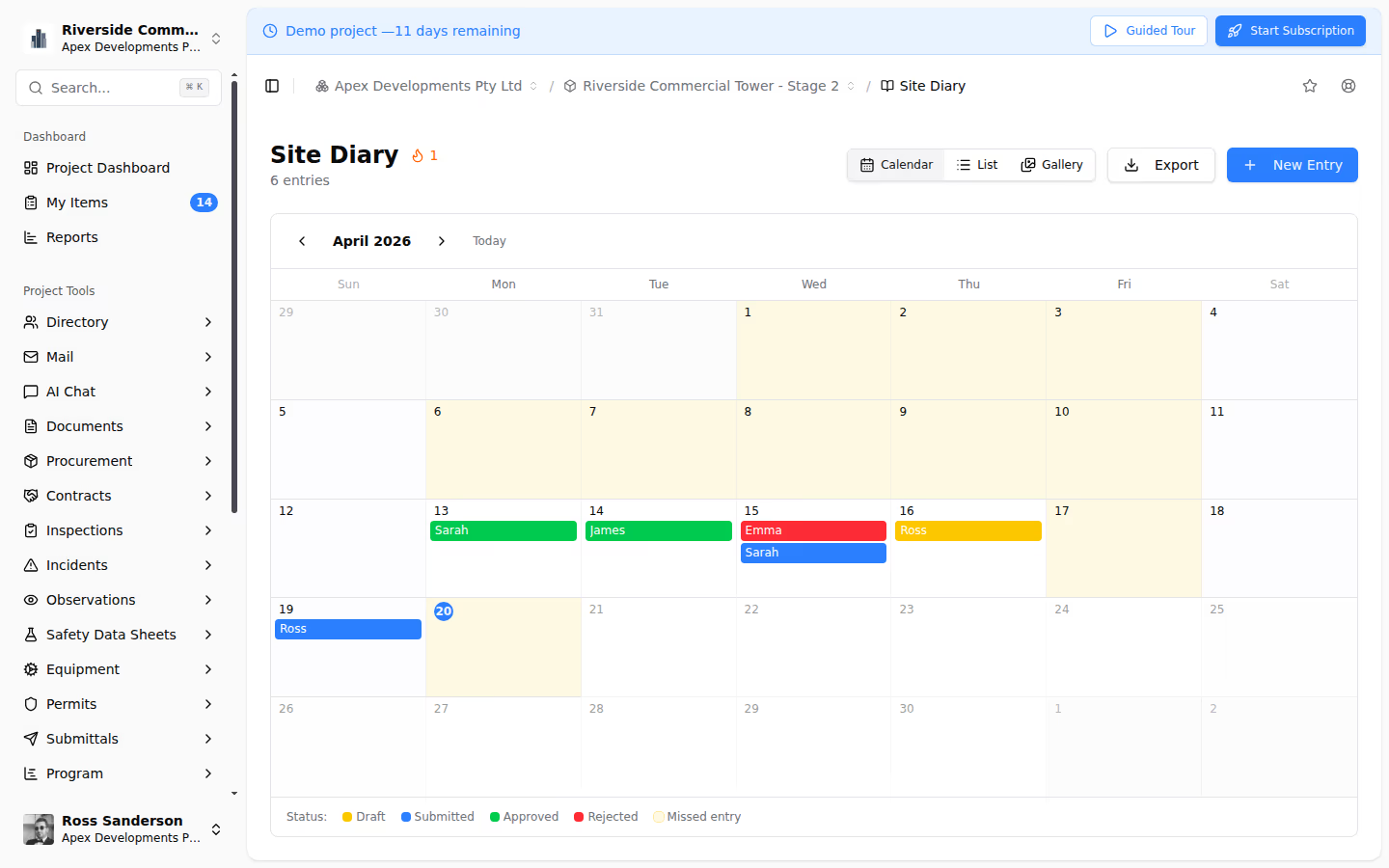
Rather than a blank text field, Teralo's diary provides structured entry types for weather, labour, activities, plant, deliveries, and notes. Custom columns can be added to capture project-specific information. This structure ensures that critical information categories are not overlooked.
Calendar and List Views
Switch between a calendar view for navigating to specific dates and a list view for scrolling through entries chronologically. Historical lookup is fast: find any day's records in seconds.
Weather and Labour Tracking
Built-in fields for weather conditions and labour headcounts mean these essential records are captured consistently every day, not just when someone remembers to include them.
Multi-User Entries
Multiple team members can contribute to the same day's diary. A site supervisor, a safety officer, and a project engineer can each add their observations, building a comprehensive record that no single person could create alone.
Photo Integration
Photos taken on site can be attached directly to diary entries, creating a visual record linked to the specific date and context.
Integration with Other Modules
Diary entries in Teralo connect to bookings, inspections, and incident reports. When an inspection is completed or an incident is logged on a specific day, it automatically appears in context within the daily diary record.
Best Practices for Site Diaries
- Make entries daily: never defer diary entries to the next day; memory fades and details are lost
- Be factual, not interpretive: record what happened, not what you think it means contractually
- Include times: noting that rain started at 10:30 AM and work resumed at 1:00 PM is more useful than "rain delay"
- Record instructions verbatim: when a client representative gives a verbal instruction, record their exact words
- Photograph everything: photos are the strongest supporting evidence for written entries
- Note what did not happen: if planned work could not proceed, record why
- Be consistent: make entries every day, including days with limited activity; gaps raise questions
Conclusion
A digital site diary is not a nice-to-have: it is an essential project management and legal protection tool. A platform like Teralo transforms the site diary from a compliance exercise into a live information source that supports daily decision-making, protects your contractual position, and builds a complete history of your project.