How Do You Run Effective Construction Meetings with Action Tracking?
Effective construction meetings are run with a clear agenda, documented minutes, assigned action items with owners and due dates, and a systematic follow-up process that ensures commitments are honoured. The difference between productive meetings and wasted time is almost entirely about what happens after the meeting: specifically, whether actions are tracked through to completion.
Why Meetings Matter in Construction
Construction projects depend on coordination between dozens of organisations: the client, consultants, contractors, subcontractors, suppliers, and regulators. Meetings are the primary mechanism for:
- Aligning stakeholders: ensuring everyone has the same understanding of project status, priorities, and upcoming work
- Making decisions: resolving design queries, approving changes, and agreeing on recovery strategies
- Identifying risks: surfacing issues before they become problems
- Tracking progress: reviewing what was accomplished against what was planned
- Assigning accountability: making clear who is responsible for what and by when
The Problem with Typical Construction Meetings
Despite their importance, construction meetings are notorious for being unproductive. Common problems include:
- No clear agenda: meetings drift through topics without structure
- Minutes arrive too late: by the time formal minutes are distributed (sometimes weeks later), the information is stale
- Actions are buried in minutes: action items are embedded in paragraphs of text and easily missed
- No follow-up: actions from previous meetings are not systematically reviewed
- Same issues reappear: without closure tracking, problems are discussed repeatedly without resolution
Types of Construction Meetings
Progress Meetings
Regular meetings (typically weekly or fortnightly) reviewing overall project progress against the programme. Attended by the client, superintendent, contractor, and key subcontractors.
Design Coordination Meetings
Focused on resolving design issues, reviewing clash detection results, and coordinating between design disciplines. Attended by the design team and relevant specialist subcontractors.
Safety Meetings
Dedicated to safety performance review, incident analysis, and safety improvement actions. May include toolbox talks at the site level and safety committee meetings at the project level.
Subcontractor Coordination Meetings
Contractor-led meetings with subcontractors to coordinate upcoming work, resolve interface issues, and manage resource conflicts.
Commercial Meetings
Reviewing contract administration matters including progress claims, variations, and contractual notices. Attendance is usually limited to commercial representatives.
How to Run Effective Meetings
Before the Meeting
- Circulate the agenda at least 24 hours before the meeting
- Review previous actions and prepare status updates
- Gather relevant data: progress percentages, programme updates, safety statistics
- Confirm attendance: ensure the right people will be in the room
During the Meeting
- Start on time: do not wait for latecomers
- Review previous actions first: close out completed actions, escalate overdue ones
- Follow the agenda: stay on topic and park discussions that need separate meetings
- Assign actions explicitly: state the action, the owner, and the due date clearly
- Capture decisions: record what was decided and by whom
- End with a summary: recap key decisions and new actions before closing
After the Meeting
- Distribute minutes within 24 hours: while the discussion is still fresh
- Highlight action items: make them clearly visible, not buried in narrative
- Track actions to completion: follow up with owners before the next meeting
- Escalate overdue actions: raise persistent non-completion with senior management
How Teralo Manages Meetings and Actions
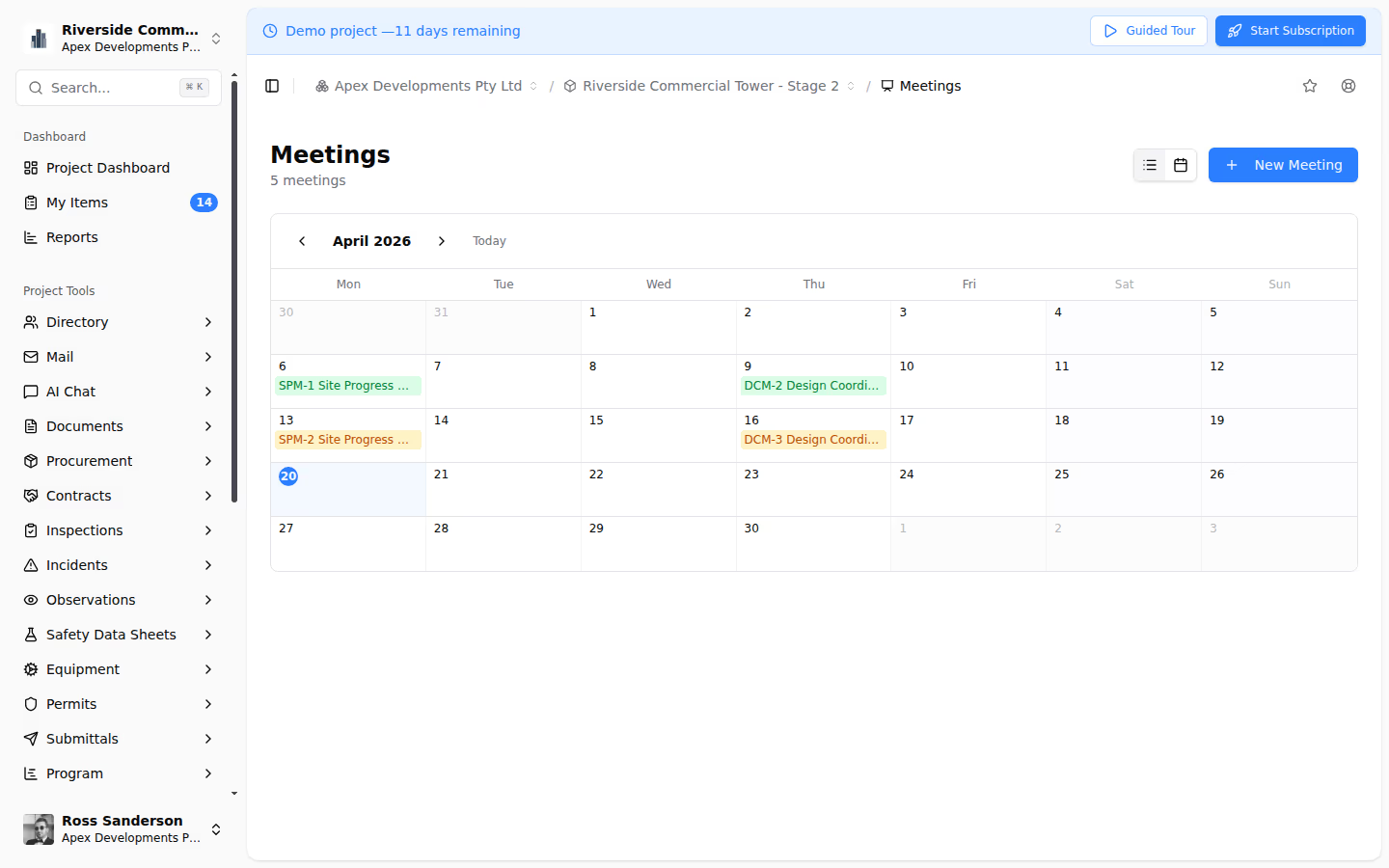
Teralo's Site Operations module provides an integrated meetings and action tracking system designed for construction projects.
Meeting Management
Schedule meetings with date, time, location, and attendees. Define recurring meetings (e.g., weekly progress meetings) so they appear automatically on the project calendar. Maintain an agenda template for each meeting type.
Minutes Capture
Record minutes with structured agenda items, discussion notes, and attendee records. Minutes are created within Teralo, so they are immediately accessible to all authorised team members, with no waiting for someone to type up handwritten notes.
Action Item Tracking
This is where Teralo's approach differs fundamentally from traditional minutes:
- Every action is a discrete item with an assignee, due date, and status
- Actions are tracked independently from the meeting minutes, so they can be filtered, sorted, and reported on
- Overdue actions are flagged automatically: no need to manually check dates
- Action owners receive notifications when items are assigned and when due dates approach
- Actions carry over between meetings until they are formally closed
Visibility Across the Project
The action item register gives project managers a single view of all open commitments across all meeting types. Filter by assignee to see what a specific person owes. Filter by meeting to see the action history for a specific forum. Filter by status to see what is overdue.
Action Tracking Best Practices
- One action, one owner: never assign an action to "the team" or multiple people; single accountability drives completion
- Be specific about the deliverable: "Review the programme" is vague; "Submit updated Level 3 programme for zone B showing recovery to milestone M4" is actionable
- Set realistic due dates: actions due "next meeting" are meaningless if the meeting is tomorrow; give owners enough time to actually deliver
- Close actions formally: do not leave actions as "ongoing" indefinitely; either close them with evidence or redefine them
- Escalate consistently: if an action has been overdue for two consecutive meetings, escalate it; tolerating chronic non-completion undermines the entire system
Conclusion
Meetings are only as effective as the actions that come out of them. By combining structured meeting management with rigorous action tracking in a platform like Teralo, construction teams can turn meetings from necessary evils into genuine project delivery tools where commitments are made, tracked, and honoured.