How Do Inductions and Licences Keep Your Construction Site Safe?
Inductions and licences keep construction sites safe by ensuring that every worker who sets foot on site has been briefed on project-specific hazards, understands the emergency procedures, and holds the qualifications required for the tasks they will perform. They are the first line of defence against incompetence, ignorance, and unauthorised access.
What Is a Site Induction?
A site induction is a structured briefing given to every person before they first access a construction site. It covers:
- Project overview: what is being built, where, and the current stage of construction
- Site rules: access points, speed limits, parking, smoking areas, phone usage, and prohibited areas
- Hazard awareness: the major hazards present on this specific site (e.g., open excavations, crane operations, live services)
- Emergency procedures: muster points, evacuation routes, first aid locations, and emergency contacts
- PPE requirements: mandatory personal protective equipment for site access
- Environmental requirements: waste management, spill response, and dust control
- Reporting procedures: how to report hazards, incidents, and near-misses
- Permits and approvals: what activities require permits before commencing
Why Inductions Are Not Optional
Inductions are a legal requirement in virtually every jurisdiction. They serve multiple purposes:
- Legal compliance: demonstrating that every person on site has been informed of the hazards and safety requirements
- Risk reduction: many incidents involve workers who are new to a site and unaware of local hazards
- Accountability: creating a record that the project team provided safety information to every worker
- Access control: ensuring that only inducted, authorised personnel are working on site
The Limitations of Paper-Based Inductions
Traditional paper inductions have significant weaknesses:
- Sign-in sheets get lost: physically tracking induction records for hundreds or thousands of workers across a project lifecycle is unreliable
- Content is inconsistent: different site supervisors may deliver different information during verbal inductions
- No verification: signing a sheet does not prove the worker understood the content
- No expiry management: when site conditions change, previously inducted workers may not receive updated information
- Time-consuming: running individual or small-group inductions for every new worker on a busy site ties up supervisors
What Are High-Risk Work Licences?
High-risk work licences (also called competency cards, tickets, or certifications) are formal qualifications that authorise individuals to perform specific dangerous activities. Common licence types include:
- Working at height: including scaffolding, rigging, and rope access
- Crane operation: specific to crane type and capacity
- Forklift operation: including various classes of forklift and telehandler
- Demolition: specific to demolition methods and building types
- Confined space entry: for working in enclosed or limited-access environments
- Electrical work: including various classes of electrical licence
- Asbestos removal: for handling and disposing of asbestos-containing materials
- Dogging and rigging: for directing crane loads and rigging lifts
Licence Management Challenges
Managing licences across a construction project is a significant administrative challenge:
- Volume: a large project may have hundreds of workers, each holding multiple licences
- Expiry tracking: licences have expiry dates that must be monitored; an expired licence is as bad as no licence
- Verification: confirming that a licence is genuine and current requires checking against issuing authority databases
- Subcontractor compliance: the principal contractor is often responsible for verifying that subcontractor personnel hold valid licences
- Record keeping: maintaining licence records for audit and compliance purposes
How Teralo Manages Inductions and Licences
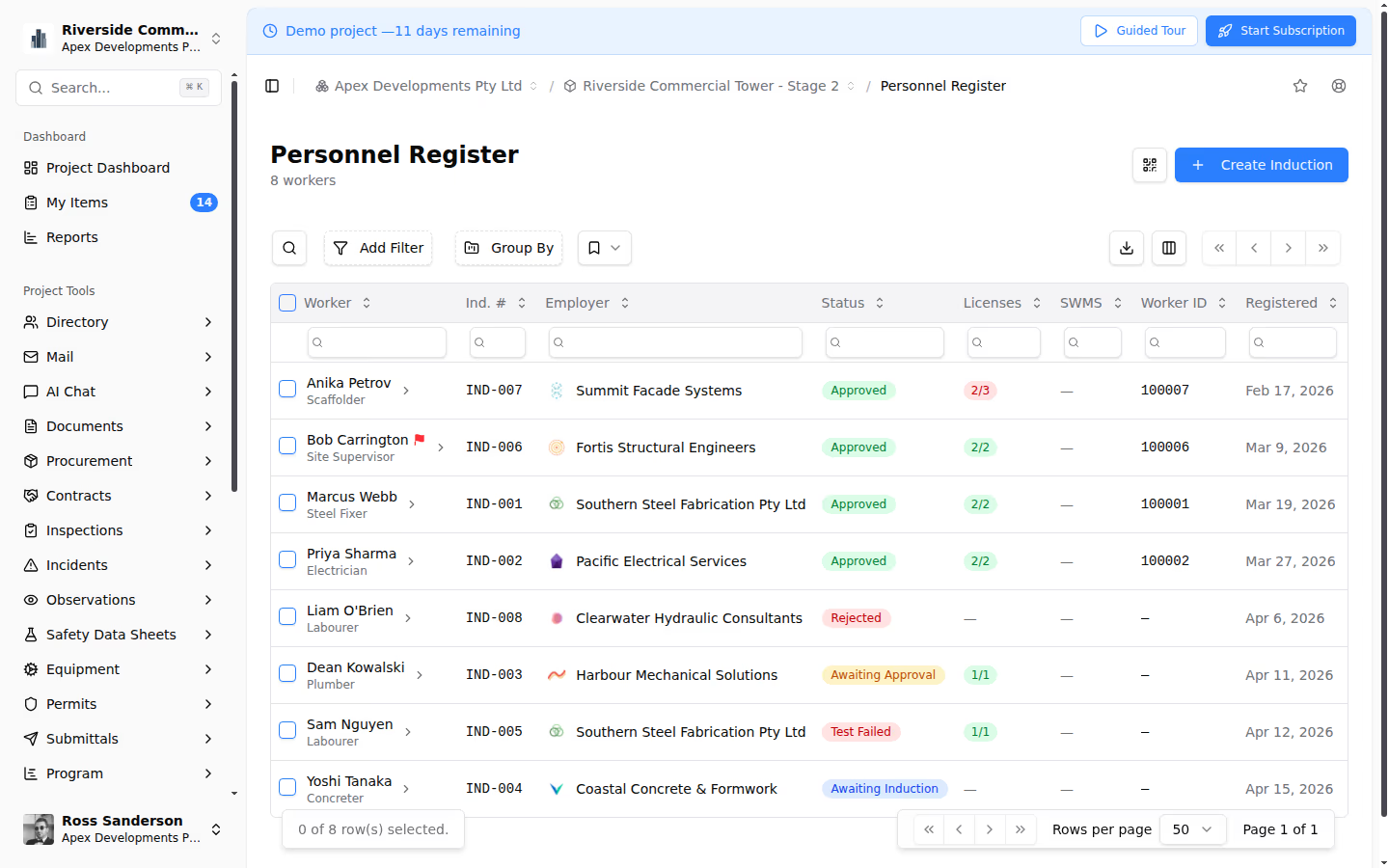
Teralo's Quality & Submissions module provides digital induction and licence management designed for construction projects.
Digital Inductions
Teralo replaces paper-based inductions with a structured digital process:
- Standardised content: every inductee receives the same information, ensuring consistency
- Digital acknowledgement: workers confirm they have read and understood the induction content, creating an auditable record
- Instant record creation: the moment an induction is completed, it is recorded in the system with date, time, and participant details
- Re-induction management: when site conditions change significantly, the system can trigger re-induction requirements for previously inducted workers
Licence Tracking
The licence management system in Teralo handles the full lifecycle:
- Licence registration: workers or their employers upload licence details including type, number, issuing authority, and expiry date
- Expiry alerts: automated notifications when licences are approaching expiry, giving workers time to renew before their qualification lapses
- Approval queues: submitted licences are reviewed and approved by project administrators before the worker is cleared for the relevant activities
- Central register: a searchable register of all personnel and their current licence status
Access Control Integration
By combining induction records with licence status, Teralo creates a gatekeeping system:
- Workers cannot be assigned to high-risk activities unless they hold the relevant valid licence
- Project managers can instantly verify whether a specific worker is inducted and qualified
- Compliance reports show the current status of all personnel on the project
Best Practices
- Make induction mandatory before first access: no exceptions, no "I'll do it tomorrow"
- Update induction content regularly: as the project progresses, new hazards emerge and old ones are resolved
- Set licence expiry alerts at 60 and 30 days: give workers adequate time to renew
- Audit licence records quarterly: verify a random sample of licences against issuing authority databases
- Track trade qualifications alongside licences: competency covers more than just high-risk work licences
- Integrate with sign-in/out: link site access records with induction and licence status so uninducted or unlicensed workers are flagged at the gate
Conclusion
Inductions and licence management are fundamental safety controls that prevent unqualified or uninformed workers from accessing construction sites. A digital system like Teralo eliminates the paper-based gaps that allow unlicensed or uninducted workers to slip through, providing real-time visibility into the qualification status of every person on your project.