What Do You Need to Know About Safety Compliance on Construction Sites?
Safety compliance on construction sites means meeting the legal obligations, industry standards, and project-specific requirements that protect workers from injury and illness. It encompasses hazard identification, risk assessment, safe work procedures, training, inspections, incident reporting, and continuous improvement, all documented and auditable.
Why Safety Compliance Is Non-Negotiable
Construction remains one of the most dangerous industries worldwide. Falls from height, struck-by incidents, electrocution, and caught-in/between hazards account for the majority of construction fatalities. Beyond the human cost:
- Legal consequences: non-compliance can result in prosecution, fines, and imprisonment for directors and site managers
- Financial impact: workplace injuries cost the construction industry billions annually through compensation, lost productivity, project delays, and increased insurance premiums
- Reputation: safety incidents damage a company's ability to win future work, particularly on government and major private-sector projects
- Project disruption: a serious incident can shut down a site for days or weeks during investigation
Core Elements of Construction Safety Compliance
Hazard Identification and Risk Assessment
Every construction activity must begin with identifying what could go wrong and assessing the severity and likelihood of each hazard. Risk assessments should be:
- Specific to the actual work being performed, not generic templates
- Updated when conditions change (e.g., weather, adjacent activities, design changes)
- Communicated to every worker involved in the activity
- Documented and retained for audit purposes
Safe Work Procedures
Risk assessments identify the hazards; method statements describe how to do the work safely. Together, they form the RAMS (Risk Assessment and Method Statement) documentation that is standard on most construction projects.
For high-risk activities, additional controls are typically required:
- Permits to work: formal authorisation before commencing activities like hot works, confined space entry, work at height, or live electrical work
- Exclusion zones: physical barriers and signage controlling access to hazardous areas
- Lock-out/tag-out procedures: isolating energy sources before maintenance or modification work
Training and Competency
Workers must be competent for the tasks they perform. Competency is demonstrated through:
- Site inductions: orientation covering site-specific rules, emergency procedures, and hazard awareness
- Trade qualifications: relevant certifications for the work being performed
- Licences: high-risk work licences for operating cranes, working at height, rigging, scaffolding, etc.
- Toolbox talks: regular short briefings on specific safety topics
- Refresher training: periodic updates to maintain awareness and address new hazards
Inspections and Audits
Regular inspections verify that safety controls are in place and effective:
- Daily walk-throughs: supervisors checking work areas before activities commence
- Formal inspections: scheduled inspections using checklists covering specific safety topics
- Third-party audits: independent safety audits by external assessors
- Regulatory inspections: unannounced visits by workplace health and safety regulators
Incident Reporting and Investigation
When incidents occur (including near-misses), they must be:
- Reported immediately to the site supervisor and project safety team
- Classified by severity (near-miss, first aid, medical treatment, lost time, serious, fatal)
- Investigated to identify root causes, not just immediate causes
- Documented with findings, corrective actions, and preventive measures
- Reported to regulators if the incident meets notifiable criteria (varies by jurisdiction)
- Closed out with verified implementation of corrective actions
Safety Documentation
Compliance requires maintaining comprehensive documentation:
- Risk assessments and method statements
- Permit-to-work records
- Induction and training records
- Inspection reports and audit findings
- Incident reports and investigation records
- Safety meeting minutes
- Emergency response plans
- Safety Data Sheets for hazardous substances
How Teralo Supports Safety Compliance
Teralo's Safety & Compliance module provides an integrated digital platform for managing all aspects of construction safety.
Inspections
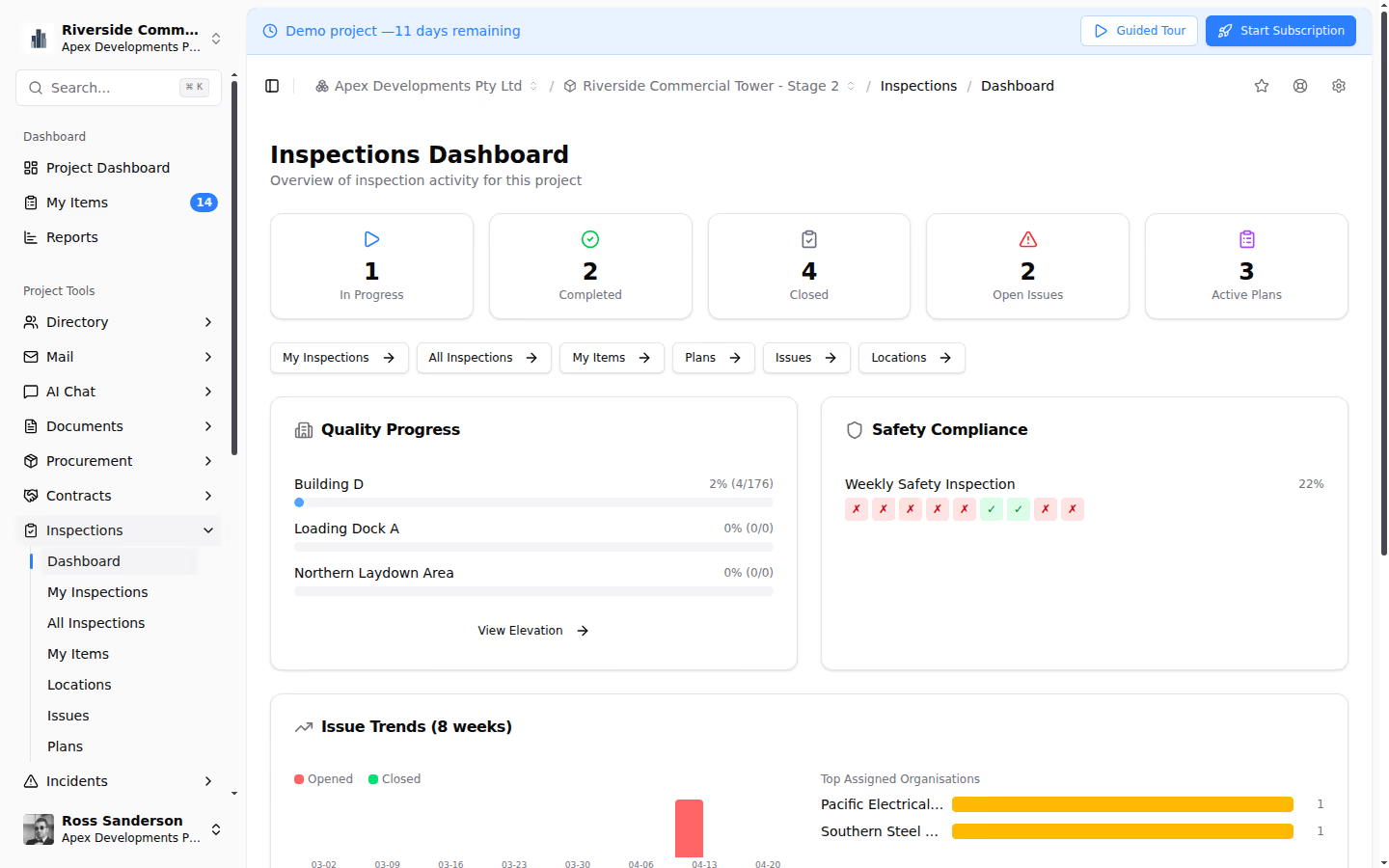
Run site inspections with configurable checklists, location-based tracking, and issue escalation. The inspection dashboard shows completion rates, open issues, and compliance trends across the project, giving safety managers instant visibility into which areas need attention.
Incidents and Injuries
Log incidents and injuries with severity classification, structured investigation workflows, and corrective action tracking. Reports can be exported for regulatory compliance reporting. The system maintains a complete audit trail from initial report through investigation to closeout.
Permits to Work
Manage work permits with configurable types (hot works, confined space, work at height, etc.), multi-step approval workflows, expiry tracking, and a central register. This ensures that high-risk work never commences without proper authorisation and that expired permits are automatically flagged.
Inductions and Licences
Track site inductions and personnel licences through Teralo's Quality module. Expiry alerts ensure that workers with lapsed licences are identified before they access the site. The approval queue system ensures only qualified, inducted workers can work on your project.
Observations
Teralo's observations tool lets anyone on the project log safety observations (positive or negative) to identify hazards before they become incidents. This supports a proactive safety culture where near-misses and unsafe conditions are captured and addressed.
Building a Safety Culture
Compliance is the minimum standard. The best-performing construction projects go beyond compliance to build a genuine safety culture where:
- Workers feel empowered to stop unsafe work without fear of consequences
- Near-miss reporting is encouraged and acted upon
- Safety is discussed at every meeting, not just safety meetings
- Leaders demonstrate safety commitment through visible engagement on site
- Good safety performance is recognised and rewarded
Conclusion
Safety compliance on construction sites requires a systematic approach to hazard management, training, inspections, and incident response. A digital platform like Teralo eliminates paper-based gaps and gives project teams real-time visibility into their safety performance, turning compliance from a checkbox exercise into a genuine management tool.