How Does Teralo Safety & Compliance Protect Construction Sites?
Teralo Safety & Compliance protects construction sites by providing an integrated digital system for inspections, incident management, permits to work, and safety observations, replacing paper-based safety processes with real-time, auditable workflows that catch hazards before they cause harm and demonstrate regulatory compliance.
The Safety Management Challenge
Construction safety management generates enormous volumes of documentation: inspection checklists, incident reports, investigation records, corrective actions, permits to work, induction records, licence certificates, and safety meeting minutes. Managing this on paper or in disconnected systems creates gaps:
- Overdue inspections go unnoticed: without a dashboard, nobody knows which inspections are behind schedule
- Corrective actions are lost: findings from inspections and incidents are documented but not tracked to closure
- Permits expire undetected: paper permits sitting on a wall can pass their validity date without anyone noticing
- Trends are invisible: incident patterns that would be obvious in data are hidden in filing cabinets
- Audit preparation is painful: assembling safety records for a regulatory inspection takes days instead of minutes
How Teralo Safety Works
Inspections
Teralo's inspection system handles the full inspection lifecycle:
Configurable checklists: Create checklists tailored to specific inspection types: safety walks, scaffolding inspections, excavation inspections, housekeeping audits, environmental compliance checks. Each checklist item can require text responses, pass/fail assessments, photo evidence, or numeric measurements.
Location-based tracking: Tag inspections to specific project locations by level, zone, area, or room. This enables spatial analysis: which areas of the project have the most safety issues? Where do quality defects cluster?
Issue escalation: When an inspection identifies a deficiency, the system creates an issue that is immediately visible to the responsible party. Issues are classified by severity (critical, major, minor) to drive appropriate response urgency. Critical issues trigger immediate notifications; minor issues are tracked through the normal action register.
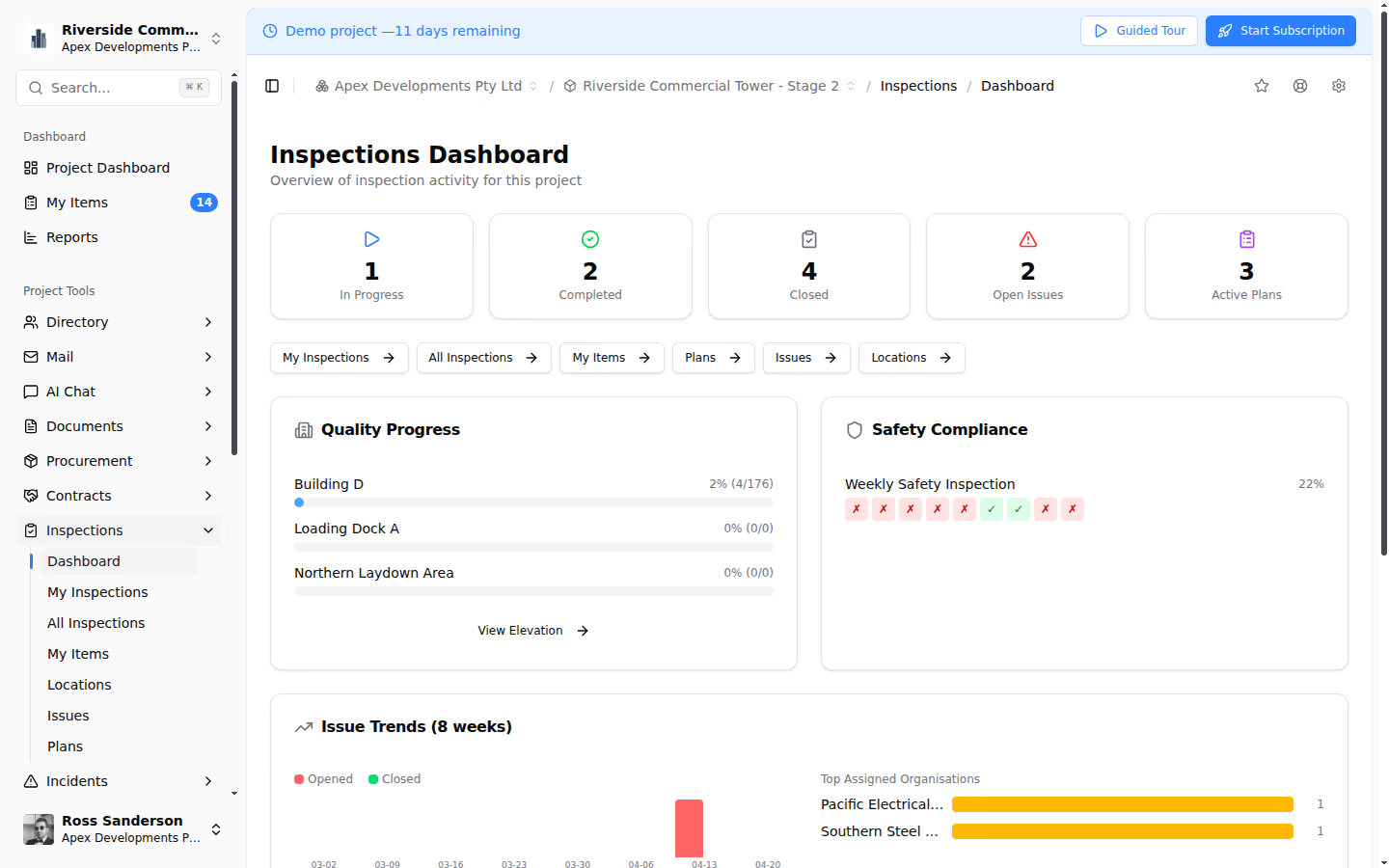
Compliance dashboard: The inspection dashboard provides real-time visibility into:
- Inspection completion rates, showing which scheduled inspections have been completed and which are overdue
- Open issues, showing how many findings remain unresolved, broken down by severity
- Compliance trends, showing whether the project's safety performance is improving or deteriorating over time
- Inspector performance, showing who is completing their inspections on schedule
Incident Management
When incidents occur, Teralo manages the full response and investigation cycle:
Structured reporting: Log incidents using a structured form that captures all required information: date, time, location, people involved, description, severity, immediate actions taken, witnesses, and photographs. The structured format ensures consistency and completeness regardless of who files the report.
Severity classification: Incidents are classified automatically based on the information provided: near-miss, first aid, medical treatment, lost time injury, serious injury. The classification determines the investigation level, notification requirements, and regulatory reporting obligations.
Investigation workflows: For incidents requiring investigation, Teralo provides a structured process: evidence collection, witness statements, root cause analysis (5 Whys, fishbone diagram), findings documentation, and corrective action definition. The investigation record links to the original incident, creating a complete chain from event to resolution.
Corrective action tracking: Every corrective action arising from an investigation is tracked as a discrete item with an owner, due date, and status. Actions appear in the project's action register and can be filtered specifically. Overdue actions are flagged and escalated.
Reporting and analytics: Export incident data for regulatory compliance reporting. The safety dashboard shows incident frequency rates, severity distribution, time-to-close metrics, and trend analysis, enabling data-driven safety improvement.
Permits to Work
Teralo's permit system manages high-risk work authorisation:
Configurable permit types: Define permit types for your project: hot work, confined space entry, electrical isolation, excavation, working at height, crane lifts, and any custom types. Each type has its own required fields, checklist items, and approval workflow.
Approval workflows: Route permit applications through the appropriate approval chain. Different permit types can have different approval requirements. A simple hot work permit might need safety officer approval, while a critical crane lift might require engineering review and site manager sign-off.
Expiry management: Every permit has a defined validity period. The system tracks these automatically:
- Notifications before permits expire
- Automatic flagging of expired permits
- Prevention of work under expired permits
- Central register showing all active, expired, and closed permits
Conflict detection: When a new permit is requested for a location where another permit is already active, the system flags the potential conflict. This prevents incompatible activities (e.g., hot work and flammable material handling) from being authorised in the same area.
Safety Observations
The observations tool supports proactive safety culture:
- Anyone on the project can log a safety observation, positive or negative
- Observations capture what was seen, where, and whether it represents a hazard or good practice
- Positive observations reinforce safe behaviours
- Negative observations capture hazards for action before they become incidents
- Observation data contributes to the project's leading safety indicators
Integration Across the Platform
Teralo Safety does not operate in isolation:
- Site diary: safety events (inspections, incidents, observations) automatically appear in the site diary for that day
- Meetings: safety issues can be raised as meeting action items, tracked through the meetings module
- Quality: safety-related method statements and inductions link to the safety management workflow
- Documents: safety plans, RAMS, and emergency procedures are managed in the document register
- Intelligence: safety KPIs feed into the project dashboard, and safety data is queryable through AI Chat
Conclusion
Teralo Safety & Compliance transforms construction safety management from a paper-based compliance exercise into a real-time digital system. Inspections, incidents, permits, and observations are managed in a single platform with dashboards, automated notifications, and audit trails, giving safety managers the tools to protect workers and demonstrate compliance.