What Construction Inspection Workflows Actually Catch Issues Early?
Construction inspection workflows catch issues early when they are tied to specific hold points in the programme, use standardised checklists tailored to each work activity, assign clear responsibilities for inspection and sign-off, and escalate defects immediately rather than logging them for later review. The key is inspecting at the right time, before the next trade covers up the previous one's work.
Why Inspections Matter
Construction is a sequential process where each trade's work is built upon, and often concealed by, the next. Reinforcement is hidden by concrete. Waterproofing is covered by protection layers. Services are concealed behind walls and ceilings. Fire-stopping is installed before partitions are closed up.
If defects in concealed work are not caught before they are covered, the cost of rectification escalates dramatically:
- Discovering a reinforcement deficiency before the pour costs time for correction
- Discovering it after the pour requires demolition, redesign, and repour, multiplying the cost by 10x or more
- Discovering it after fit-out is complete may require stripping entire floors
This is why inspection workflows must be proactive, not reactive. The goal is to catch every defect at the earliest possible point.
Types of Construction Inspections
Hold Point Inspections
Hold points are mandatory stop-checks in the construction sequence where work must pause until an inspection is completed and signed off. Typical hold points include:
- Pre-pour inspections: checking reinforcement, formwork, and embedments before a concrete pour
- Waterproofing inspections: verifying membrane application before protection layers are installed
- Fire-stopping inspections: checking penetration seals before walls and ceilings are closed
- Structural connection inspections: verifying bolt torque, weld quality, or connection geometry
- Services pressure testing: testing pipe systems before they are concealed
Hold point inspections are non-negotiable. Work cannot proceed until the inspection is passed and signed off by the designated inspector.
Witness Point Inspections
Witness points are inspections where the inspector is invited to attend but work can proceed if they do not show up within a defined timeframe. They provide an opportunity for the client or consultant to verify work quality without creating programme delays.
Routine Site Inspections
Regular inspections covering safety, housekeeping, quality, and environmental compliance. These are typically conducted on a weekly or fortnightly cycle using standardised checklists.
Defect Inspections
Focused inspections to identify and document defects, typically conducted during fitout, pre-completion, and practical completion stages. These generate defect lists (snag lists) that are tracked through to rectification and close-out.
Building an Effective Inspection Workflow
1. Define the Inspection and Test Plan
The ITP is the master document that specifies:
- Every inspection and test required for each work activity
- Whether each checkpoint is a hold point, witness point, or routine check
- Who is responsible for performing and signing off each inspection
- What acceptance criteria apply
- What records must be produced
The ITP should be agreed between the contractor, consultant, and client at the start of the project and updated as the work progresses.
2. Standardise Checklists
Each inspection type should have a standardised checklist that ensures consistency:
- Checklists should list specific items to check, not vague categories
- Include acceptance criteria and tolerances where applicable
- Provide space for comments and photos
- Include clear pass/fail/N.A. options for each item
- Reference the relevant specification clauses
3. Schedule Inspections in Advance
Inspections should be scheduled in coordination with the construction programme:
- Hold point inspections need minimum notice periods (typically 24-48 hours)
- Inspectors need to know the expected date so they can plan their time
- Multiple inspections on the same day should be sequenced to avoid conflicts
- The inspection schedule should be visible to all parties
4. Capture Results Digitally
Inspection results should be recorded digitally at the point of inspection:
- Complete the checklist on a tablet or phone while on site
- Attach photos showing the work inspected
- Note any defects or non-conformances with location and severity
- Get digital sign-off from the inspector immediately
- Distribute results to relevant parties automatically
5. Escalate Issues Immediately
When an inspection identifies a defect:
- Do not wait for the next meeting to raise it; notify the responsible party immediately
- Classify the severity (critical, major, minor) to drive the response urgency
- Assign a rectification owner and due date
- Track the defect through to close-out with verification
- Prevent the next activity from proceeding until critical defects are resolved
How Teralo Handles Inspections
Teralo's Safety & Compliance module provides a digital inspection system designed for construction.
Configurable Checklists
Create inspection checklists tailored to each work activity. Checklists can include text responses, pass/fail items, photo requirements, and numeric measurements. Templates can be reused across projects with modification for project-specific requirements.
Location-Based Tracking
Tag inspections to specific locations within the project, by level, zone, or area. This enables spatial analysis of inspection results, showing which areas of the project have more quality issues.
Issue Escalation
When an inspection fails or identifies defects, issues are escalated immediately within Teralo. The responsible party receives a notification, and the issue is tracked in a register until it is resolved and verified.
Compliance Dashboard
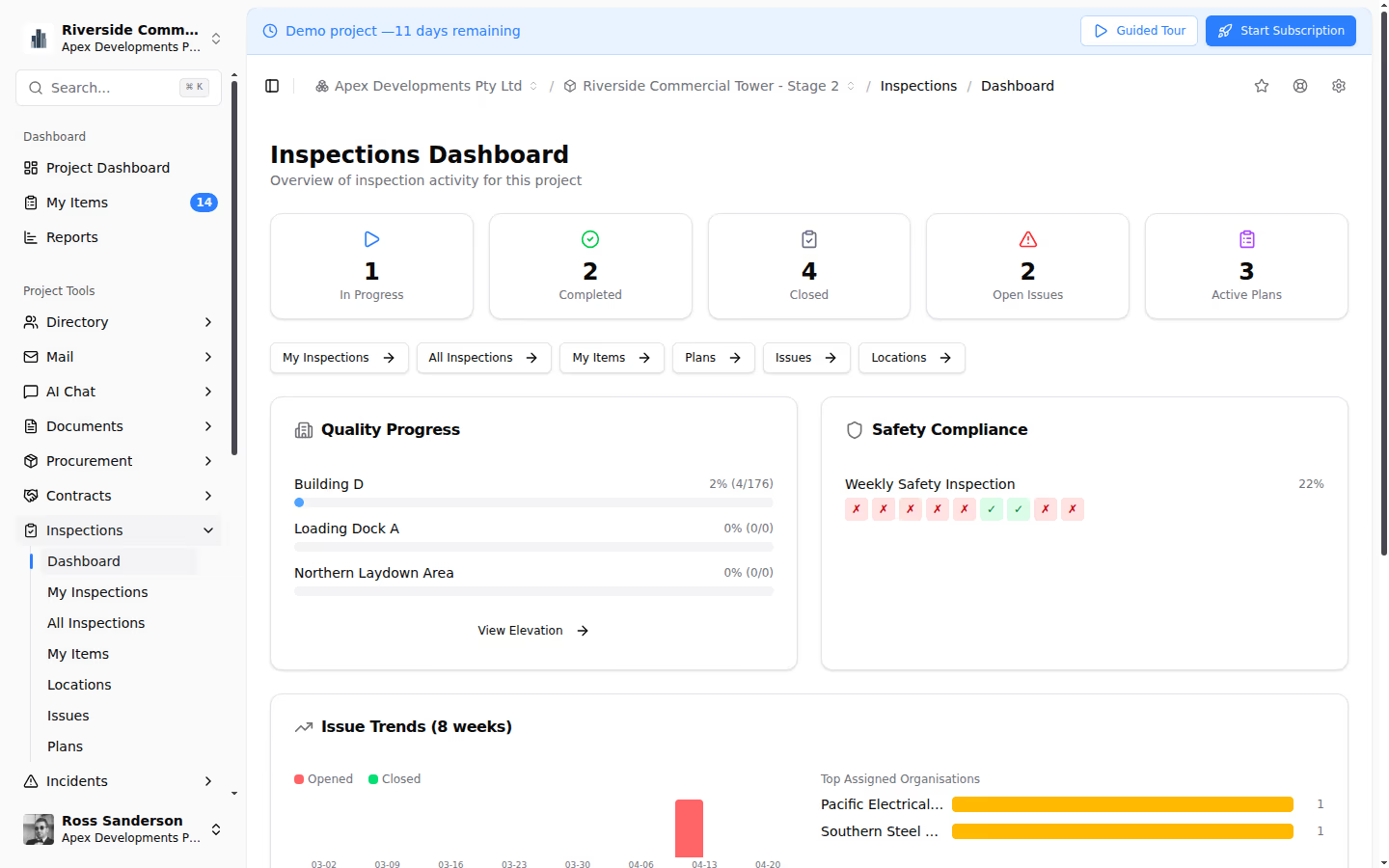
The inspection dashboard shows completion rates, open issues, and compliance trends across the project. Safety and quality managers can see at a glance which inspections are overdue, which areas have open issues, and whether the overall quality trend is improving or deteriorating.
Audit Trail
Every inspection creates a complete digital record: who inspected, when, what was checked, what was found, and what actions were taken. This audit trail satisfies regulatory requirements and provides evidence of due diligence in the event of a quality dispute.
Best Practices
- Inspect before you conceal: the golden rule; never cover work that has not been inspected at the required hold points
- Use the ITP as a living document: update it as the project progresses and lessons are learned
- Track inspection completion rates: if inspections are being skipped or deferred, the quality system is failing
- Close defects with evidence: a photo of the rectified work is worth more than a verbal confirmation
- Review trends: if the same defect type keeps appearing, the root cause needs addressing, not just the symptom
- Involve subcontractors in the process: make inspection requirements clear in subcontracts so there are no surprises
Conclusion
Inspection workflows that catch issues early are built on clear hold points, standardised checklists, timely execution, and immediate escalation. A digital platform like Teralo turns inspections from a paper exercise into a real-time quality management system that prevents defects from being buried under the next layer of construction.