How Do Method Statements Provide Clarity on Construction Tasks?
Method statements are step-by-step written procedures that describe exactly how a construction task should be carried out safely and to the required quality standard. They eliminate ambiguity by documenting the sequence of work, the resources needed, the hazards involved, and the controls that must be in place before work begins.
What Is a Method Statement?
A method statement, also called a Safe Work Method Statement (SWMS), Method of Procedure (MOP), or work method, is a document that breaks a construction activity into a logical sequence of steps. Each step identifies:
- What work is being performed
- Who is responsible for carrying it out
- How the work will be executed safely
- What equipment and materials are required
- What hazards are present and how they will be controlled
- What quality checks are needed at each stage
Method statements are not the same as risk assessments, though they work hand-in-hand. A risk assessment identifies hazards and evaluates risk levels, while a method statement prescribes the actual procedure for doing the work safely.
Why Are Method Statements Essential?
Clear Communication Across Teams
Construction projects involve multiple contractors, subcontractors, and trades working in close proximity. Method statements ensure everyone understands exactly how a task should be performed, reducing misunderstandings that lead to rework, delays, or safety incidents.
When a formwork crew arrives on site, a well-written method statement tells them the exact sequence: inspect the area, set up exclusion zones, erect the falsework to specified tolerances, install the formwork panels, check alignment, and get sign-off before the concrete pour. There is no room for interpretation.
Improved Safety Outcomes
Method statements force teams to think through hazards before work begins. By documenting each step alongside its associated risks and controls, they create a systematic approach to hazard management that goes beyond generic risk assessments.
For high-risk activities like working at height, hot works, confined space entry, or heavy lifts, method statements are often a legal requirement. They form part of the permit-to-work system and must be reviewed and approved before work can commence.
Quality Assurance
Beyond safety, method statements define the quality standards that must be met at each stage. They specify inspection and test points (ITPs), hold points where work must stop for verification, and the acceptance criteria for each activity.
This is particularly important for critical structural works, waterproofing, fire-stopping, and other activities where defects are expensive or impossible to rectify after the fact.
Regulatory Compliance
In many jurisdictions, method statements are a legal requirement for construction work. They demonstrate that the principal contractor and subcontractors have planned the work adequately and considered the health and safety implications.
Regulators and clients frequently audit method statements as part of their oversight. Having well-documented procedures demonstrates due diligence and can be critical in the event of an incident investigation.
Key Elements of an Effective Method Statement
A comprehensive method statement typically includes:
- Project and task identification: project name, location, activity description, and reference numbers
- Scope of work: clear boundaries of what the method statement covers
- Sequence of operations: numbered steps in the order they will be performed
- Resources: personnel, plant, equipment, and materials required
- Hazard identification: risks associated with each step
- Control measures: specific actions to mitigate each identified hazard
- Emergency procedures: what to do if something goes wrong
- Environmental considerations: waste management, noise, dust, and spill controls
- Quality requirements: standards, tolerances, and inspection points
- Signatures and approvals: evidence that the document has been reviewed and accepted
How Teralo Helps Manage Method Statements
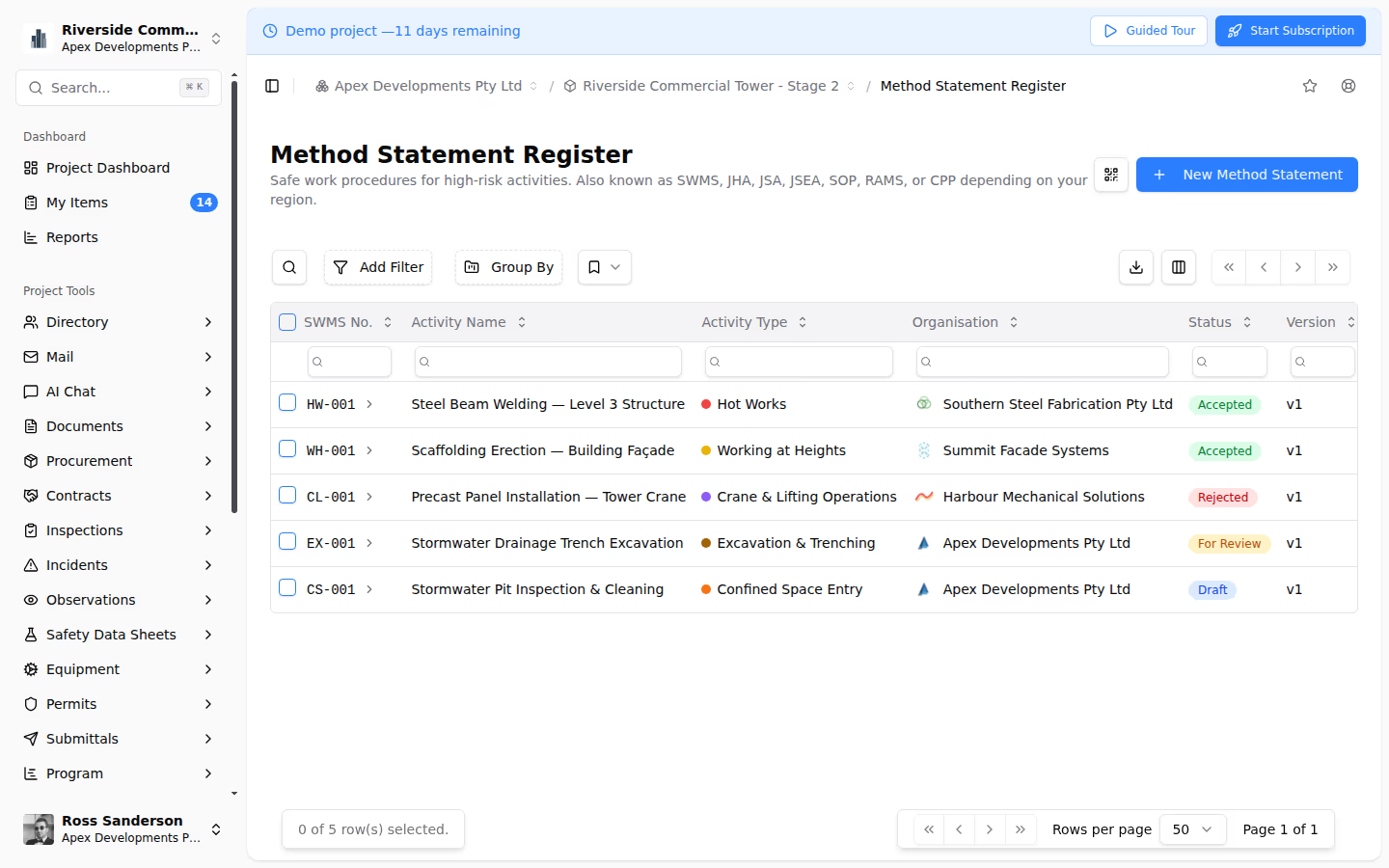
Teralo's Quality & Submissions module provides a digital platform for creating, reviewing, approving, and distributing method statements across your project team.
Structured Templates
Instead of starting from scratch with a Word document, Teralo provides structured templates that guide authors through each required section. This ensures consistency across all method statements on a project and prevents critical sections from being overlooked.
Approval Workflows
Method statements go through a formal review and approval process within Teralo. Reviewers can comment on specific sections, request changes, and track revision history. The approval chain is fully auditable, showing who reviewed the document, when they approved it, and what comments were made.
Distribution and Acknowledgement
Once approved, method statements are automatically distributed to the relevant personnel. Workers can acknowledge they have read and understood the procedure directly within Teralo, creating a digital record of briefings.
Version Control
As work conditions change, method statements need updating. Teralo maintains full version history, so you can see exactly what changed between revisions and ensure everyone is working from the latest approved version.
Integration with Permits and Inspections
Method statements in Teralo link directly to the permit-to-work system and inspection workflows. When a permit is issued for high-risk work, the associated method statement is automatically referenced. Inspection checklists can be tied to specific method statement steps, ensuring quality checks happen at the right time.
Best Practices for Writing Method Statements
- Be specific: avoid vague instructions like "take appropriate precautions." State exactly what the precaution is.
- Use plain language: the document must be understood by the people doing the work, not just the person writing it.
- Include diagrams and photos where they add clarity. A sketch of the lifting plan is worth a thousand words.
- Review with the workforce: the people performing the task often have practical insights that improve the method statement.
- Keep them current: a method statement written six months ago may not reflect current site conditions.
- Make them accessible: if workers cannot find or access the method statement, it serves no purpose.
Conclusion
Method statements are fundamental to running safe, high-quality construction projects. They translate complex tasks into clear, repeatable procedures that everyone can follow. When managed digitally with a platform like Teralo, they become living documents that integrate with your broader project management workflows, from permits and inspections to quality sign-offs and compliance reporting.