What Is a Permit to Work System and How Does It Work?
A permit to work (PTW) system is a formal documented procedure that authorises specific people to carry out specific high-risk work at a specific location for a specific time period, with defined safety controls in place. It ensures that dangerous activities are only performed after a systematic assessment of the risks and the implementation of necessary precautions.
When Is a Permit to Work Required?
Permits to work are required for activities where the normal site safety controls are insufficient and additional, task-specific controls must be in place. Common permit types include:
Hot Work Permits
Required for any work involving open flames, sparks, or heat sources in areas where fire risk exists. This includes welding, cutting, grinding, brazing, and soldering. Hot work permits typically require:
- Removal or protection of combustible materials within a defined radius
- Fire extinguishers positioned at the work location
- A fire watch during and after the work (typically 30-60 minutes post-completion)
- Suppression of smoke detection in the immediate area (with compensating measures)
Confined Space Entry Permits
Required before anyone enters a confined space, an enclosed or partially enclosed area that is not designed for continuous human occupancy and may contain hazardous atmospheres, engulfment hazards, or other dangers. Requirements include:
- Atmospheric testing before and during entry
- Continuous ventilation
- A standby person at the entry point
- Rescue equipment immediately available
- Communication system between the entrant and standby person
Working at Height Permits
Required for work at height where standard edge protection is not in place or where additional controls are needed (e.g., work over voids, work on fragile surfaces, use of mobile elevated work platforms in complex situations).
Electrical Work Permits
Required for work on or near live electrical installations, including isolation, testing, and reconnection. Permits ensure proper lock-out/tag-out procedures are followed and that only qualified electricians perform the work.
Excavation Permits
Required before breaking ground, to ensure underground services have been identified, marked, and protected. Requirements include service location surveys, hand-dig requirements near known services, and shoring specifications for deep excavations.
Crane Lift Permits
Required for critical lifts: lifts near capacity, lifts over occupied areas, tandem lifts, or lifts in constrained spaces. The permit documents the lift plan, including crane configuration, load weight, radius, and ground bearing capacity.
How a Permit to Work System Operates
1. Application
The person or team wanting to perform the work applies for a permit. The application includes:
- Description of the work
- Location (specific enough to identify the exact area)
- Start and end time
- Personnel involved
- The specific hazards and proposed controls
- Reference to the relevant method statement or safe work procedure
2. Assessment and Approval
The permit is reviewed by the designated authority, typically the site safety manager or an authorised permit issuer. The reviewer:
- Verifies that the hazards have been correctly identified
- Confirms that the proposed controls are adequate
- Checks for conflicts with other activities in the same area
- Ensures the required equipment and personnel are available
- Issues the permit with any additional conditions
3. Briefing
Before work commences, the permit holder briefs all workers involved on:
- The scope of the permitted work
- The hazards and controls
- The time limits of the permit
- What to do if conditions change
- Emergency procedures
4. Execution
Work proceeds within the boundaries defined by the permit. The permit is displayed at the work location so it is visible to anyone in the area. Key rules during execution:
- Work must stop if conditions change from those described in the permit
- The permit must be extended or re-issued if work takes longer than the permitted period
- Only the activities described in the permit are authorised
5. Close-Out
When the work is complete:
- The work area is inspected to confirm it is safe and clean
- All isolation points are restored (for electrical and confined space permits)
- Fire watch periods are completed (for hot work permits)
- The permit is formally closed by the issuer
- The completed permit is filed for record
Common Permit System Failures
- Permits not closed out: work finishes but the permit remains open, creating confusion about whether the area is safe
- Expired permits not renewed: work continues after the permitted time window has elapsed
- Inadequate briefing: workers are not properly briefed on the permit conditions
- Parallel permits conflicting: two permits issued for adjacent or overlapping areas without coordination
- Rubber-stamp approvals: permits approved without genuine review of the hazards and controls
- Paper permits lost: physical permits get damaged, lost, or illegible
How Teralo Manages Permits to Work
Teralo's Safety & Compliance module provides a digital permit-to-work system that eliminates the common failures of paper-based systems.
Configurable Permit Types
Define permit types specific to your project: hot work, confined space, electrical, excavation, crane lift, and any custom types. Each type has its own required fields, checklist items, and approval workflow.
Multi-Step Approval Workflows
Route permits through the appropriate approval chain. A hot work permit might need safety officer approval, while a critical crane lift might need engineering review and site manager sign-off. The workflow is configurable per permit type.
Expiry Tracking
Permits have defined validity periods. Teralo tracks these automatically, sending notifications before permits expire and flagging any permits that have expired without being closed out. This prevents the common problem of work continuing under an expired permit.
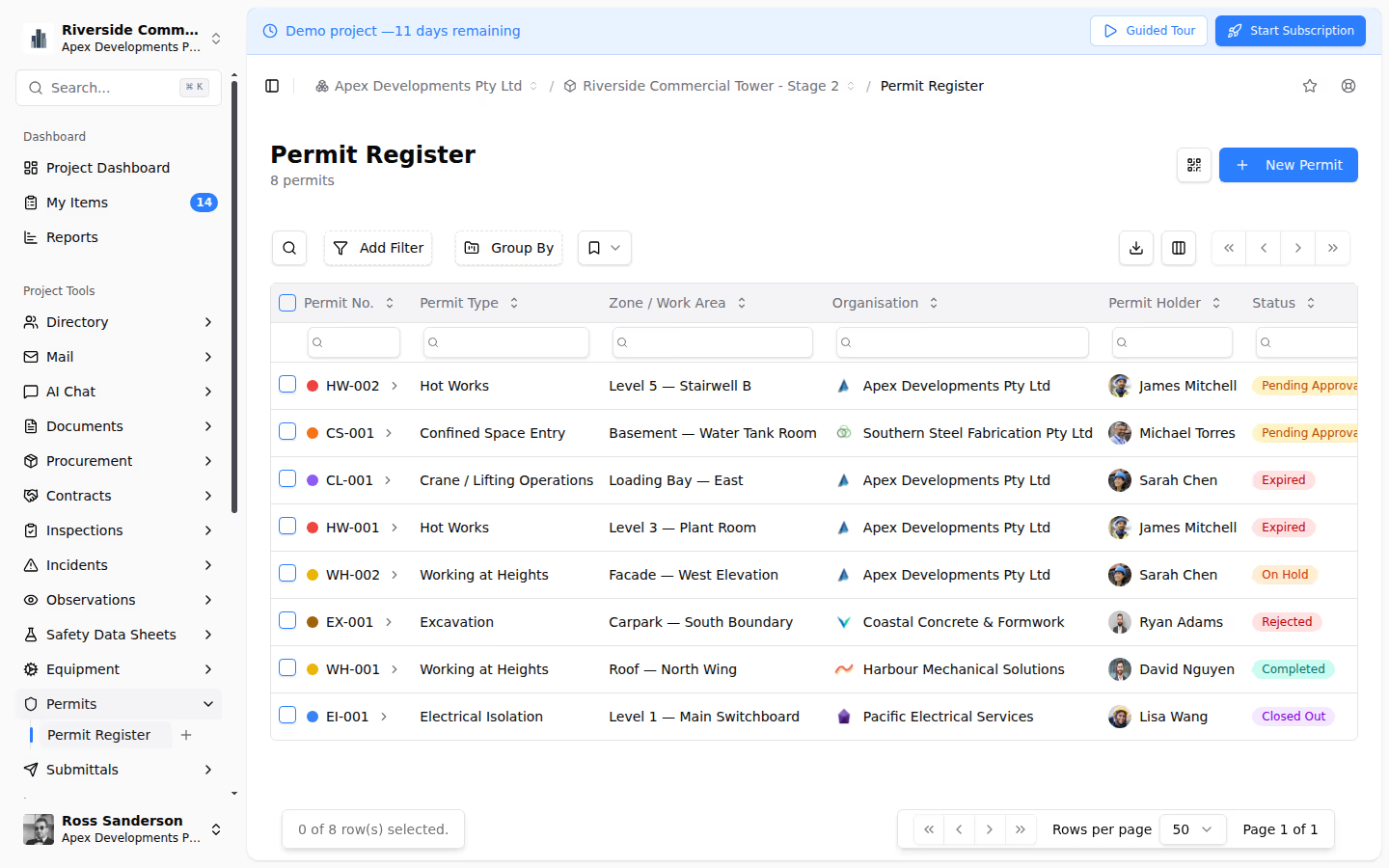
Central Register
All permits (active, expired, and closed) appear in a central register with full search and filter capability. During an audit or incident investigation, finding the relevant permit takes seconds rather than hours.
Conflict Detection
When a new permit is requested for a location where another permit is already active, the system flags the potential conflict. This prevents the dangerous situation of two incompatible activities being authorised in the same area simultaneously.
Best Practices
- Display the permit at the work location: make it visible to everyone in the area
- Brief every worker: not just the supervisor; every person involved in the permitted activity must understand the conditions
- Set realistic validity periods: a 24-hour permit for a 2-hour task creates risk; match the duration to the actual work
- Audit regularly: review open permits daily to catch any that should have been closed
- Integrate with method statements: the permit references the method statement; the method statement references the permit requirement
- Never work without a valid permit: this must be a zero-tolerance rule
Conclusion
A permit to work system is not bureaucracy. It is a life-saving control for high-risk construction activities. A digital system like Teralo ensures that permits are properly assessed, approved, tracked, and closed, eliminating the gaps that paper-based systems inevitably create.