How Do You Manage Incidents and Injuries on a Construction Site Effectively?
Incidents and injuries on construction sites are managed effectively through immediate response protocols, structured reporting systems, thorough root cause investigation, corrective action implementation, and regulatory compliance reporting. The goal is not just to respond to incidents but to prevent recurrence through systematic learning.
The Incident Management Lifecycle
1. Immediate Response
When an incident occurs, the priority sequence is:
- Ensure safety: secure the area, prevent further injury, and remove people from danger
- Provide first aid: administer immediate medical attention to any injured persons
- Call emergency services: if the injury is serious, call for ambulance, fire, or other emergency response
- Preserve the scene: do not disturb the incident area until it has been investigated (unless necessary for rescue)
- Notify management: alert the site supervisor, project manager, and safety team immediately
2. Initial Reporting
Every incident must be reported promptly, regardless of severity. The initial report should capture:
- Date, time, and location of the incident
- People involved: names, employers, roles, and contact details
- Description of what happened: factual account of events leading up to, during, and immediately after the incident
- Injuries sustained: nature and severity of any injuries
- Immediate actions taken: first aid provided, area secured, emergency services called
- Witnesses: names and contact details of anyone who saw the incident
- Photographs: images of the incident scene, equipment involved, and injuries (with consent)
3. Classification
Incidents are classified by severity to drive the appropriate level of investigation and response:
- Near-miss: an event that could have caused injury but did not (e.g., a dropped tool that missed a worker)
- First aid: minor injury treated on site with no lost time
- Medical treatment: injury requiring treatment by a medical professional but no lost work days
- Lost time injury (LTI): injury causing one or more days away from work
- Serious injury: significant injury requiring hospitalisation, including fractures, amputations, serious burns, or loss of consciousness
- Fatality: death resulting from a workplace incident
The classification determines:
- The level of investigation required
- Whether the incident must be reported to regulators
- The timeframe for completing the investigation
- Who needs to be notified within the organisation
4. Investigation
The purpose of investigation is to identify root causes (the underlying systemic failures that allowed the incident to occur), not just the immediate triggers.
Investigation methods include:
- 5 Whys: asking "why" repeatedly to drill down from the immediate cause to the root cause
- Fishbone (Ishikawa) diagram: categorising potential causes under headings like People, Process, Equipment, Environment, and Management
- Timeline analysis: mapping the sequence of events to identify where controls failed
- Barrier analysis: examining which safety barriers were in place, which were absent, and which failed
Common root cause categories:
- Inadequate risk assessment or method statement
- Insufficient training or supervision
- Defective equipment or materials
- Poor housekeeping or site conditions
- Failure to follow established procedures
- Inadequate communication between teams
- Design that created unnecessary hazards
- Time pressure leading to shortcuts
5. Corrective Actions
Investigation findings must translate into specific, actionable corrective measures:
- Immediate actions: address the direct cause and prevent recurrence of the specific incident
- Systemic actions: address root causes that could lead to other types of incidents
- Preventive actions: strengthen controls across the project to prevent similar incidents
Each corrective action should have:
- A clear description of what needs to be done
- An assigned owner responsible for implementation
- A due date for completion
- A verification method to confirm the action was effective
6. Close-Out and Learning
The incident management cycle is complete when:
- All corrective actions have been implemented and verified
- The investigation report is finalised and filed
- Lessons learned have been communicated to the project team (and the wider organisation where relevant)
- Regulatory reporting obligations have been met
- The incident register is updated with final status
Regulatory Reporting Requirements
Most jurisdictions require certain incidents to be reported to the workplace health and safety regulator. The specifics vary, but generally:
- Fatalities must be reported immediately (within hours)
- Serious injuries (hospitalisation, amputation, serious burns, loss of consciousness) must be reported within 24-48 hours
- Dangerous occurrences (structural collapse, uncontrolled explosion, gas leak, electrical incident) must be reported within a defined timeframe
- Lost time injuries may need to be reported depending on the jurisdiction and duration
Failure to report notifiable incidents is a criminal offence in most jurisdictions.
How Teralo Manages Incidents
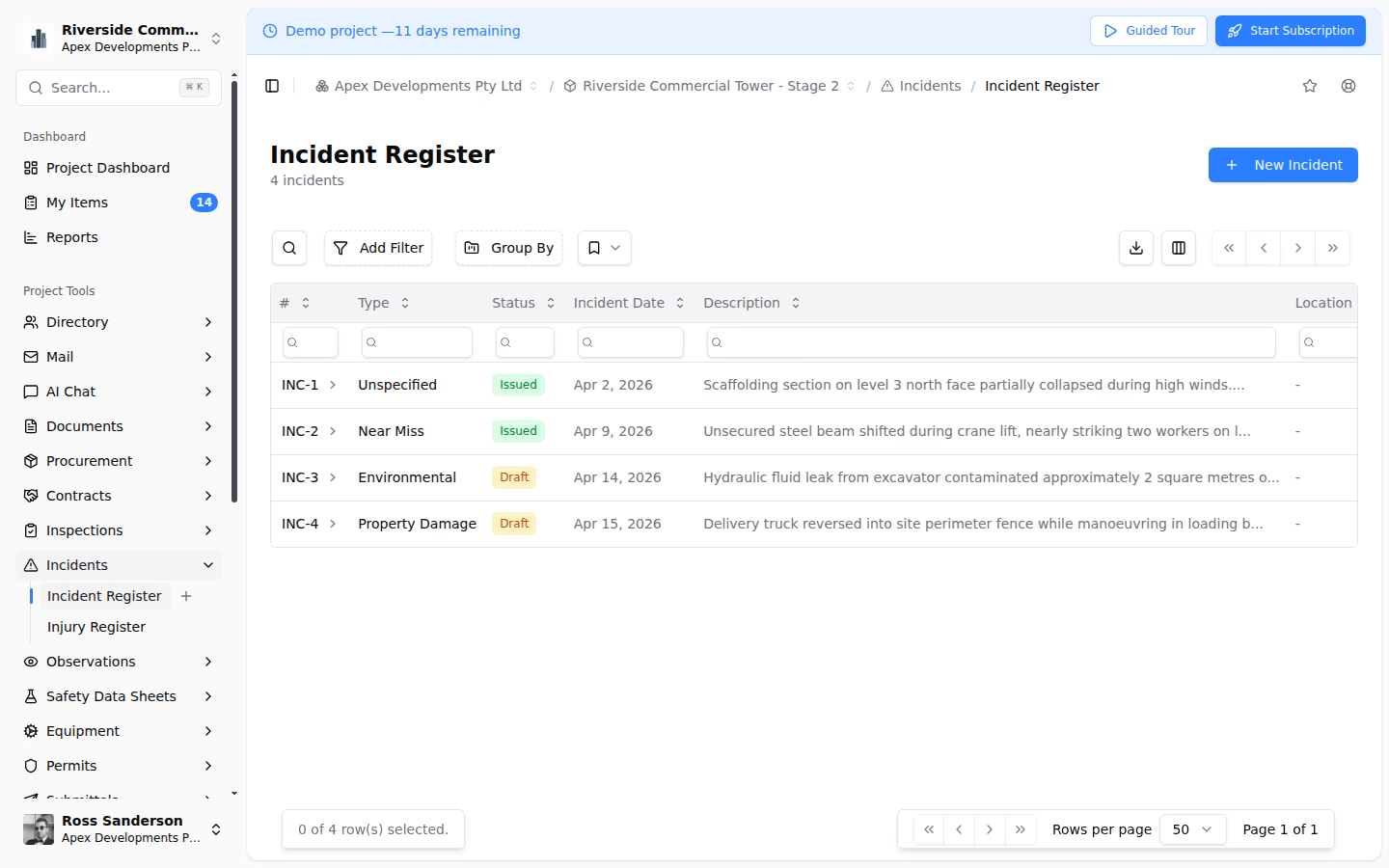
Teralo's Safety & Compliance module provides a comprehensive digital incident management system.
Incident Logging
Log incidents directly from the site using a mobile device. The structured form captures all required information including date, time, location, people involved, description, severity classification, and photos. This ensures consistent, complete reporting regardless of who files the report.
Severity Classification
Teralo's classification system categorises incidents by severity, automatically triggering the appropriate investigation and notification workflows. A near-miss triggers a basic review, while a serious injury triggers a full investigation with mandatory regulatory reporting reminders.
Investigation Workflows
Investigations are managed within Teralo with structured steps: evidence collection, witness statements, root cause analysis, and findings documentation. The investigation record links to the original incident report, creating a complete chain from event to analysis.
Corrective Action Tracking
Each corrective action arising from an investigation is tracked as a discrete item with an owner, due date, and status. Actions are visible in the project's action register and can be filtered to show safety-related items specifically. Overdue actions are flagged automatically.
Reporting and Analytics
Export incident data for regulatory compliance reporting. The safety dashboard shows incident trends, severity distribution, and corrective action completion rates, enabling the project team to identify patterns and focus improvement efforts where they will have the most impact.
Building a Reporting Culture
The biggest challenge in incident management is not the process; it is getting people to report. Workers may not report incidents because they:
- Fear disciplinary action
- Think near-misses do not matter
- Believe nothing will change
- Do not want to create paperwork
Overcoming this requires:
- No-blame reporting: make clear that reporting is valued, not punished
- Act on reports: demonstrate that reports lead to improvements
- Celebrate near-miss reporting: it is a leading indicator of safety culture maturity
- Make reporting easy: digital reporting on a mobile device removes the friction of paper forms
- Provide feedback: tell reporters what happened as a result of their report
Conclusion
Effective incident management on construction sites requires a systematic approach that goes beyond immediate response to address root causes and prevent recurrence. A digital platform like Teralo streamlines the entire lifecycle (from initial report through investigation, corrective actions, and close-out), ensuring that every incident becomes an opportunity to make the site safer.