How Do You Manage Progress Claims and Variations Without the Headaches?
Progress claims and variations are managed effectively by establishing clear contractual processes, maintaining detailed cost breakdowns, implementing multi-step approval workflows, and using a centralised system that tracks every claim and variation from submission through to payment. The headaches come when these processes are informal, undocumented, or inconsistent.
What Are Progress Claims?
Progress claims (also called payment claims, progress payments, or applications for payment) are periodic submissions from a contractor to the client requesting payment for work completed during a specific period. They are the primary cash flow mechanism for construction contracts.
A typical progress claim includes:
- Schedule of values: a line-by-line breakdown of the contract value showing the percentage or amount completed for each item
- Claim period: the dates covered by the claim (usually monthly)
- Cumulative progress: total work completed to date, less previous payments
- Retention: the amount held back by the client as security (typically 5-10% of the claim value)
- Variations: approved scope changes valued and included in the claim
- Supporting documentation: measurement records, delivery dockets, inspection sign-offs
The Progress Claim Cycle
- Contractor prepares claim: measuring work completed, calculating values, assembling documentation
- Contractor submits claim: within the timeframe specified in the contract (e.g., by the 25th of each month)
- Superintendent/client reviews: assessing quantities, verifying completion, adjusting values where necessary
- Payment certificate issued: the superintendent certifies the amount due
- Payment made: the client pays the certified amount within the contractual payment period
This cycle repeats monthly throughout the project. Getting it wrong, through late submissions, disputed quantities, or missing documentation, directly impacts cash flow and creates friction between parties.
What Are Variations?
Variations (also called change orders) are changes to the original contract scope, whether additions, omissions, or modifications to the specified work. Common causes include:
- Design changes: the architect or engineer modifies the design after the contract is awarded
- Client-directed changes: the client requests additional work or different finishes
- Unforeseen conditions: ground conditions, existing services, or structural conditions that differ from what the contract documents indicated
- Regulatory changes: new building code requirements or authority conditions imposed after contract award
- Errors in contract documents: discrepancies between drawings and specifications that require resolution
Why Variations Cause Problems
Variations are the single largest source of disputes in construction contracts. The problems are predictable:
- Scope disagreements: the contractor and client disagree on whether a change constitutes a variation or is already included in the contract scope
- Valuation disputes: disagreement on the fair value of the changed work
- Timing: variations are often executed before they are formally agreed, creating valuation and payment uncertainty
- Documentation gaps: verbal instructions to change work are not followed up with formal variation orders
- Cumulative impact: multiple variations can have compounding effects on programme and productivity that are not captured in individual variation valuations
How to Manage Claims and Variations Effectively
Establish Clear Processes Early
At the start of every project, agree on:
- Claim submission dates and format: when claims are due and what they must include
- Variation notification requirements: how quickly the contractor must notify the client of potential variations
- Valuation methodology: how variation work will be valued (schedule rates, cost-plus, lump sum quotation)
- Approval authority: who has the authority to approve variations and at what value thresholds
- Documentation requirements: what records are needed to support claims and variation valuations
Maintain Detailed Cost Breakdowns
The schedule of values should be granular enough to accurately reflect progress. A single line item for "structural concrete, $2,000,000" does not provide enough detail to assess monthly progress. Breaking it down by zone, level, or element enables accurate measurement and reduces disputes.
Document Everything Contemporaneously
Site diary records, photographs, daily labour and plant records, and correspondence all serve as evidence when claims or variations are disputed. The value of this documentation increases dramatically when it is digital, timestamped, and searchable.
Separate Variation Assessment from Payment
Do not hold up progress claims while variations are being assessed. Process the agreed portion of each claim promptly, and track disputed items separately. Cash flow problems caused by delayed payments create adversarial relationships that make future negotiations harder.
How Teralo Manages Claims and Variations
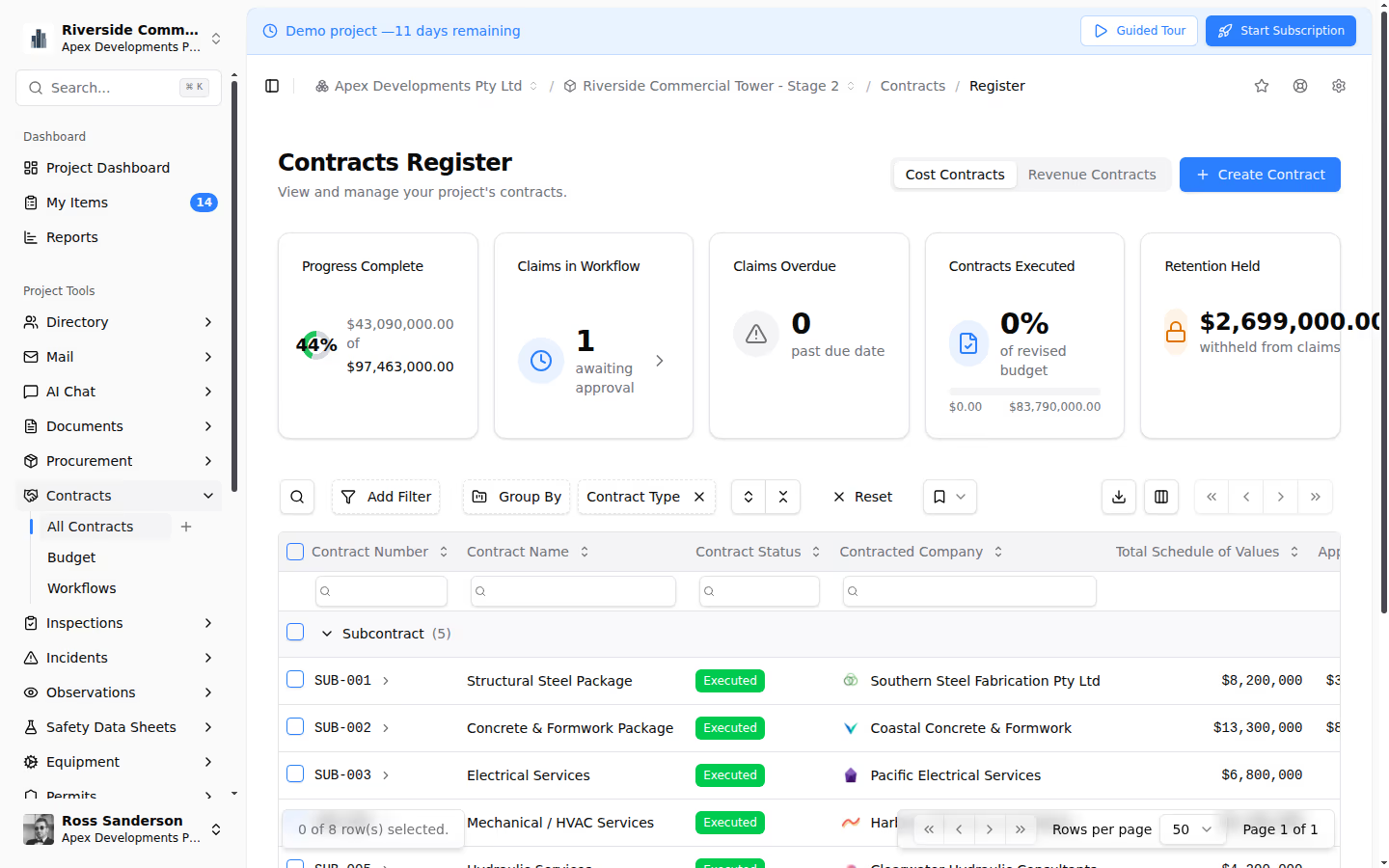
Teralo's Contracts module provides comprehensive tools for managing progress claims and variations on construction projects.
Progress Claims
Process payment claims with detailed schedule breakdowns, showing claimed amounts against contract values at each line item. Retention calculations are automated based on the contract terms. Multi-step approval workflows route claims through the review chain, from the contractor's submission through the superintendent's assessment to the client's certification.
Budget Tracking
Track contract budgets with detailed cost breakdowns, fund transfers between budget lines, and variance analysis. The system shows the original contract value, approved variations to date, revised contract value, amounts claimed, amounts certified, amounts paid, and retention held, all in real time.
Financial Dashboard
Monitor contract health with real-time metrics covering progress, claims, retention, and budget execution. The financial dashboard provides at-a-glance visibility into the commercial status of every contract on the project, highlighting contracts where claims are overdue, variations are unapproved, or budgets are under pressure.
Variation Register
Variations are tracked in a central register with status, value, and approval history. Each variation links to supporting documentation: the instruction that triggered it, the contractor's quotation, the assessment, and the approval. This creates a complete audit trail from cause to payment.
Best Practices
- Submit claims on time every month: late claims signal disorganisation and erode the client's confidence
- Keep a variation register from day one: do not wait until variations become disputes; track them from the moment they arise
- Photograph and measure before and after: visual evidence is the strongest support for both claims and variations
- Respond to claims promptly: delayed assessment is a leading cause of payment disputes
- Separate entitlement from quantum: agree that a variation exists before arguing about its value
- Use the contract: follow the notice, assessment, and payment provisions in the contract; shortcuts create contractual risk
Conclusion
Progress claims and variations do not have to be painful. When managed through clear processes, detailed documentation, and a centralised platform like Teralo, they become routine commercial administration rather than a source of disputes and cash flow uncertainty.