How Does Teralo Procurement Manage the Full Construction Tender Lifecycle?
Teralo Procurement manages the full construction tender lifecycle by providing structured package management, formal tender administration, centralised supplier coordination, and seamless integration with the contracts module for post-award management. It takes procurement from initial scope definition through tendering, evaluation, and award in a single auditable system.
The Procurement Challenge in Construction
Construction procurement is complex because it involves multiple packages progressing through different stages simultaneously, each with its own timeline, tenderer list, and evaluation criteria. A typical project may have 20-50 procurement packages at various stages: some in early scoping, some mid-tender, some in evaluation, and some already awarded.
Managing this across spreadsheets, emails, and shared drives creates:
- No single view of procurement status: project managers cannot see which packages are on track and which are falling behind
- Document chaos: tender documentation scattered across email inboxes and file shares
- Process inconsistencies: different packages follow different processes depending on who manages them
- Audit gaps: no clear record of why a particular tenderer was selected or rejected
- Missed deadlines: tender submissions overlooked or evaluated late
How Teralo Procurement Works
Package Management
Every procurement item starts as a package. A package represents a scope of work or supply that will be procured as a single unit:
- Scope definition: clear description of what the package covers, including inclusions and exclusions
- Budget allocation: the estimated cost or budget for the package
- Programme dates: when the package needs to be awarded and when work needs to start
- Schedule of values: the cost breakdown structure that tenderers will price against
- Document links: associated drawings, specifications, and scope documents from the Document Register
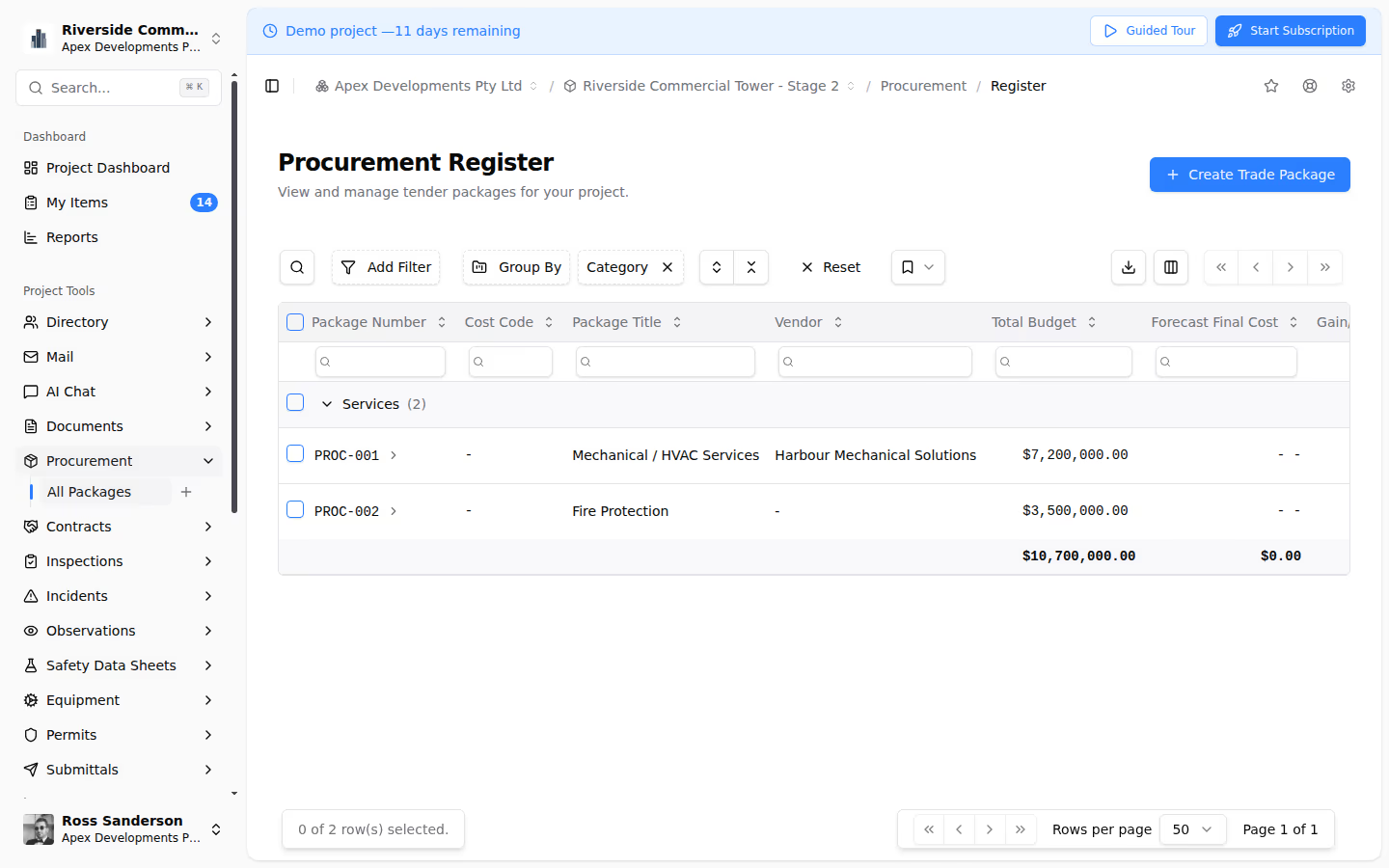
The package register provides a single view of all procurement packages on the project, showing their current stage, budget, and timeline. Project managers can see at a glance which packages are on track and which need attention.
Tender Administration
When a package is ready for market, the tender process is managed within Teralo:
Tender creation and issue:
- Create the tender with all required documentation attached
- Select tenderers from the supplier database (pre-vetted through prequalification)
- Set the tender timeline: issue date, query deadline, submission deadline
- Issue the tender to selected tenderers through the platform
Query management:
- Tenderers submit clarification queries through Teralo
- Queries and responses are logged and visible to all tenderers (maintaining a fair process)
- Addenda are issued formally if tender documents need to be amended
Submission management:
- Tenderers upload their submissions through the platform before the deadline
- Late submissions are flagged automatically
- All submissions are stored securely in one location
Evaluation:
- Compare returned tenders side by side
- Score against predefined evaluation criteria (price, programme, methodology, experience, safety)
- Document the evaluation rationale for each tenderer
- Record the recommendation and approval decision
Supplier Coordination
The supplier database is a long-term asset that grows with each project:
- Contact management: company details, key contacts, and communication history
- Trade categories: categorise suppliers by the trades and services they provide
- Prequalification status: track which suppliers have been prequalified and when their prequalification expires
- Performance history: record performance ratings from previous projects to inform future shortlisting
When a new package is ready for tendering, the supplier database provides a pre-vetted shortlist based on trade, capability, and past performance, eliminating the scramble to find suitable tenderers.
Integration with Contracts
When a tender is awarded, the procurement record flows into Teralo's Contracts module:
- The awarded contract value becomes the contract budget baseline
- The schedule of values from the tender becomes the basis for progress claims
- The scope documentation from the tender package is linked to the contract record
- The supplier's contact information and prequalification records carry forward
This seamless transition eliminates the data gap that often occurs between procurement and contract administration, where tender information is filed away and the contracts team starts from scratch.
The Procurement Register
The procurement register is the central control point. It shows every package with:
- Status: scoping, tender preparation, out to tender, evaluation, awarded, cancelled
- Budget: estimated and awarded values
- Timeline: planned and actual dates for each stage
- Tenderers: how many were invited, how many responded
- Next action: what needs to happen to progress the package
Filtering the register by status, timeline, or value gives project managers the visibility they need to manage procurement proactively rather than reactively.
Best Practices Supported by Teralo
- Start procurement early: Teralo's package register makes it easy to create and track long-lead packages months before they are needed
- Maintain the supplier database: every tender interaction improves the database for future projects
- Document evaluation rationale: Teralo's evaluation tools create an auditable record of why each tenderer was selected or rejected
- Track queries centrally: all tender queries and responses are logged for transparency and fairness
- Link procurement to programme: package timeline dates connect to the master programme so delays are visible
Conclusion
Teralo Procurement provides end-to-end management of the construction procurement lifecycle, from package scoping through tender administration, supplier coordination, and contract award. It replaces the fragmented process of emails, spreadsheets, and shared drives with a structured, auditable system that gives project teams complete visibility into their procurement pipeline.