How Do You Manage Procurement Workflows in Construction?
Construction procurement is managed through a structured workflow that takes materials, equipment, and subcontractor services from initial scope definition through tendering, evaluation, contract award, and delivery. Effective procurement management ensures that the right resources arrive on site at the right time, at the right price, and to the required quality standard.
Why Procurement Management Matters
Procurement is one of the largest cost centres on any construction project, typically accounting for 60-80% of the total project value through subcontract packages and material purchases. Poor procurement management leads to:
- Programme delays: materials arriving late because orders were placed too late or specifications were unclear
- Budget overruns: paying premium prices for urgent orders that should have been planned
- Quality issues: receiving materials that do not meet specifications because requirements were not communicated clearly
- Contractual disputes: unclear scope definitions leading to claims and variations
- Supply chain failures: over-reliance on single suppliers without backup options
The Construction Procurement Lifecycle
1. Scope Definition and Packaging
The first step is breaking the project scope into procurable packages. Each package should represent a logical grouping of work or materials that can be awarded to a single supplier or subcontractor:
- Trade packages: subcontract packages by discipline (e.g., structural steel, mechanical services, facade)
- Material packages: bulk material purchases (e.g., concrete, reinforcement, timber)
- Equipment packages: plant and equipment hire (e.g., tower crane, hoists, temporary power)
- Specialist packages: items requiring specialist procurement (e.g., lifts, escalators, generators)
Each package needs a clear scope of work, specification references, programme dates, and budget allocation.
2. Market Sounding and Prequalification
Before issuing tenders, the procurement team identifies potential suppliers and assesses their capability:
- Capability: can they deliver the required scope at the required quality?
- Capacity: do they have the resources available during the required period?
- Financial stability: are they financially sound enough to complete the work?
- Safety record: do they meet the project's safety requirements?
- Past performance: what is their track record on similar projects?
Prequalification filters the supplier pool to a manageable shortlist of capable tenderers.
3. Tender Preparation and Issue
The tender package typically includes:
- Invitation to tender letter: scope overview, submission requirements, and timeline
- Scope of work: detailed description of what is included and excluded
- Drawings and specifications: technical documents defining the work
- Schedule of values: cost breakdown structure for pricing
- Programme requirements: key dates and milestones
- Contract conditions: terms and conditions that will apply
- Safety and quality requirements: project-specific standards
4. Tender Period and Queries
During the tender period, tenderers review the documentation and submit clarification queries. All queries and responses must be shared with all tenderers to maintain a fair process. A pre-tender meeting or site visit may be organised for complex packages.
5. Evaluation and Negotiation
Returned tenders are evaluated on multiple criteria:
- Price: total cost and schedule of values breakdown
- Programme: proposed methodology and timeline
- Qualifications and exclusions: what the tenderer has excluded or qualified in their offer
- Technical compliance: do they meet the specification requirements?
- Safety approach: proposed safety management for the work
- References: feedback from previous projects
Shortlisted tenderers may be invited for an interview or negotiation to clarify their offer and agree final terms.
6. Award and Mobilisation
Once a subcontractor is selected, the contract is formalised and the mobilisation process begins:
- Contract execution and insurance verification
- Detailed programme coordination
- Submittal schedule agreement
- Safety documentation review (RAMS/SWMS)
- Site induction scheduling
7. Ongoing Management
After award, procurement management continues through:
- Progress tracking: monitoring delivery against programme
- Variation management: assessing and approving scope changes
- Quality surveillance: inspecting work against specifications
- Payment management: processing progress claims against the schedule of values
How Teralo Manages Procurement
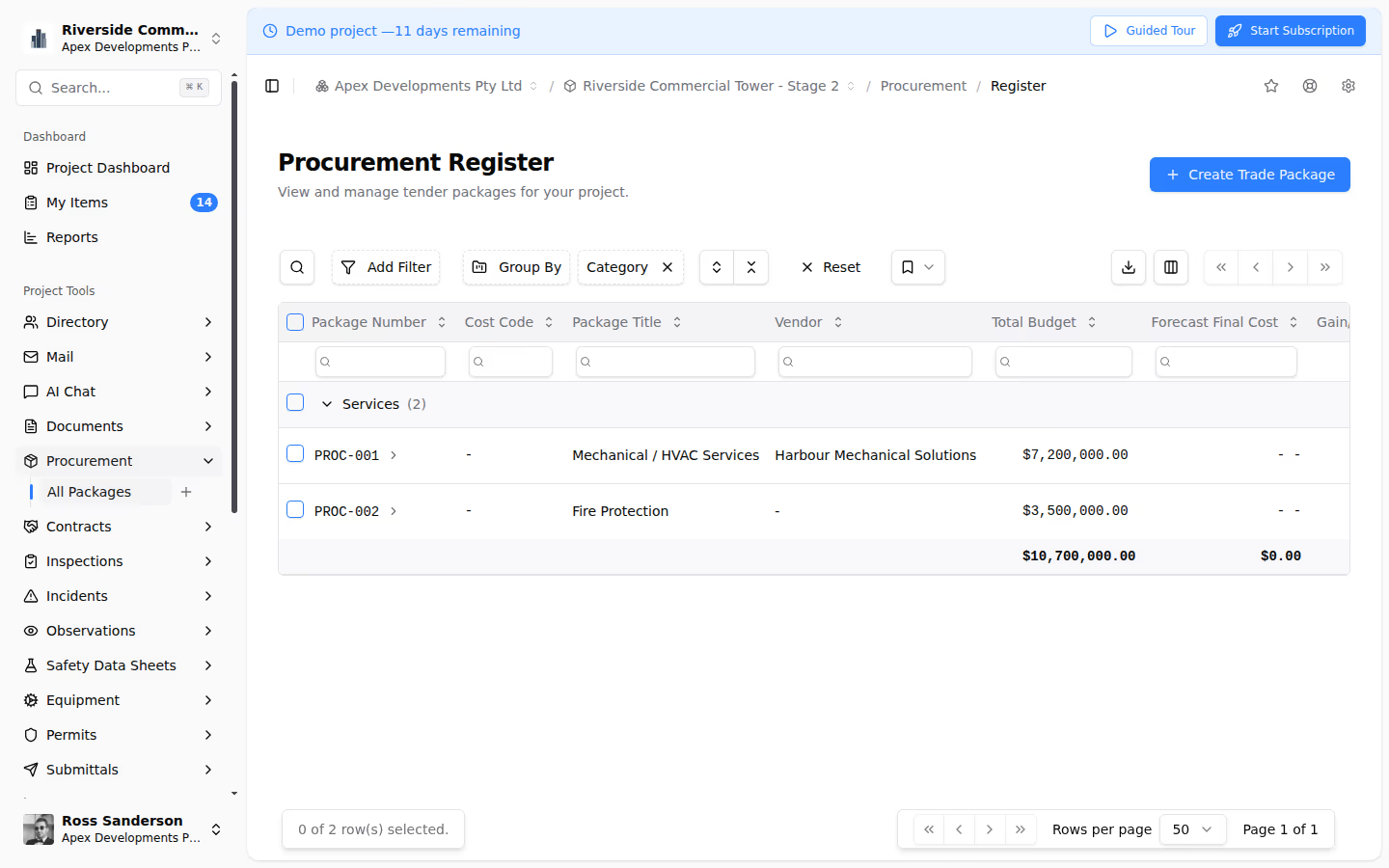
Teralo's Procurement module provides end-to-end procurement lifecycle management for construction projects.
Package Management
Create and manage procurement packages with scope definition, budget allocation, and schedule of values. Each package tracks its status from initial scoping through tender, award, and execution, giving the procurement team a single register of all packages and their current stage.
Tender Administration
Issue tenders, manage bid submissions, evaluate suppliers, and track the full tender lifecycle within Teralo. Tender documents are distributed through the platform, queries and addenda are managed centrally, and returned tenders are stored securely for evaluation.
Supplier Coordination
Maintain your supplier database with contact details, prequalification status, and performance history. When it is time to invite tenderers for a new package, the database provides a pre-vetted shortlist based on trade, capability, and past performance.
Integration with Contracts
When a package is awarded, Teralo links the procurement record to the Contracts module for ongoing financial management, including progress claims, variations, and budget tracking. This creates a seamless flow from procurement through to final account.
Procurement Best Practices
- Start early: long-lead items like structural steel, lifts, and facade systems need procurement initiation months before installation
- Maintain a procurement schedule: a register showing every package with planned and actual dates for each procurement stage
- Separate price from quality: evaluate technical and commercial aspects independently before combining scores
- Document everything: every decision, evaluation, and communication should be recorded for audit purposes
- Build relationships: procurement is not just about lowest price; reliable supply chain partners deliver better project outcomes
- Manage risk: identify single-source risks and develop backup options for critical packages
Conclusion
Effective procurement management is the backbone of construction project delivery. A structured approach, supported by a digital platform like Teralo, ensures that packages are defined clearly, tendered fairly, awarded wisely, and managed through to completion without the gaps and delays that plague unstructured procurement processes.