How Do You Run a Successful Construction Tender?
A successful construction tender is run by defining the scope clearly, prequalifying capable tenderers, issuing comprehensive documentation, managing the tender period transparently, evaluating submissions against consistent criteria, and awarding the contract to the tenderer offering the best overall value, not necessarily the lowest price.
Why the Tender Process Matters
The tender process determines who will build your project and at what price. Get it right, and you award the work to a capable contractor who delivers on time, on budget, and to specification. Get it wrong, and you face:
- Claims and variations: poorly defined scope leads to disputes about what is included
- Programme delays: selecting a contractor without adequate capacity or experience
- Quality failures: choosing based on price alone and getting what you paid for
- Contractual disputes: ambiguous tender documents creating different interpretations
- Subcontractor failures: inadequate financial vetting leading to mid-project insolvency
The Tender Lifecycle
1. Procurement Strategy
Before issuing any tenders, define the procurement strategy:
- Contract form: lump sum, design and build, cost-plus, guaranteed maximum price?
- Package structure: single main contractor, or multiple trade packages?
- Selection method: open tender, select tender, negotiated?
- Evaluation criteria: price only, or multi-criteria (price, programme, methodology, experience)?
- Programme requirements: what are the key dates the contractor must meet?
2. Prequalification
Prequalify potential tenderers before investing their time and yours in a full tender:
- Experience: have they completed similar projects in type, size, and complexity?
- Capacity: do they have the management team and workforce available during the project period?
- Financial standing: are they financially stable enough to sustain the project's cash flow requirements?
- Safety record: what is their safety performance on recent projects?
- References: what do previous clients, consultants, and subcontractors say about working with them?
Aim for 3-5 prequalified tenderers. Fewer limits competition; more wastes resources (including the tenderers' time and money in preparing submissions).
3. Tender Documentation
The quality of the tender documentation directly determines the quality of the responses. A comprehensive tender package includes:
Commercial documents:
- Invitation to tender letter with submission requirements and deadlines
- Form of tender (what the tenderer must submit)
- Conditions of contract (or reference to a standard form)
- Schedule of values or bill of quantities for pricing
- Preliminary items schedule
- Special conditions or amendments
Technical documents:
- Drawings (architectural, structural, services, civil)
- Specifications
- Geotechnical report
- Survey information
- Programme requirements and milestones
- Site-specific constraints and logistics requirements
Administrative documents:
- Tender programme (key dates for queries, site visits, submission)
- Tender evaluation criteria and weightings
- Health and safety requirements
- Insurance requirements
- Prequalification questionnaire (if not already completed)
4. Tender Period Management
During the tender period:
- Hold a pre-tender meeting: walk tenderers through the project, visit the site, and answer initial questions
- Manage queries centrally: all questions must be submitted in writing, and all answers must be shared with all tenderers to maintain fairness
- Issue addenda formally: if the tender documents are amended during the tender period, issue numbered addenda to all tenderers
- Allow adequate time: a complex construction tender typically needs 4-6 weeks; rushing the process leads to incomplete or qualified submissions
5. Evaluation
Evaluate submissions systematically:
Commercial evaluation:
- Check arithmetic (errors in bills of quantities are common)
- Compare rates against benchmarks and between tenderers
- Identify qualifications and exclusions (what has the tenderer not included?)
- Assess preliminary costs and programme-related costs
- Evaluate risk pricing and contingency
Technical evaluation:
- Review the proposed programme and methodology
- Assess the proposed management team and their relevant experience
- Evaluate the construction methodology for feasibility and risk
- Review the safety and quality management approach
- Check compliance with all specification requirements
Interviews:
- Shortlisted tenderers should present their approach and answer questions
- Focus on the project-specific management team, not head office directors
- Ask about risk management, quality control, and programme delivery strategies
6. Negotiation and Award
After evaluation:
- Clarify any ambiguities in the preferred tenderer's submission
- Negotiate scope and commercial adjustments if necessary
- Confirm the management team committed in the tender will be assigned to the project
- Finalise contract documents incorporating any agreed changes
- Notify unsuccessful tenderers with feedback on why they were not selected
How Teralo Supports the Tender Process
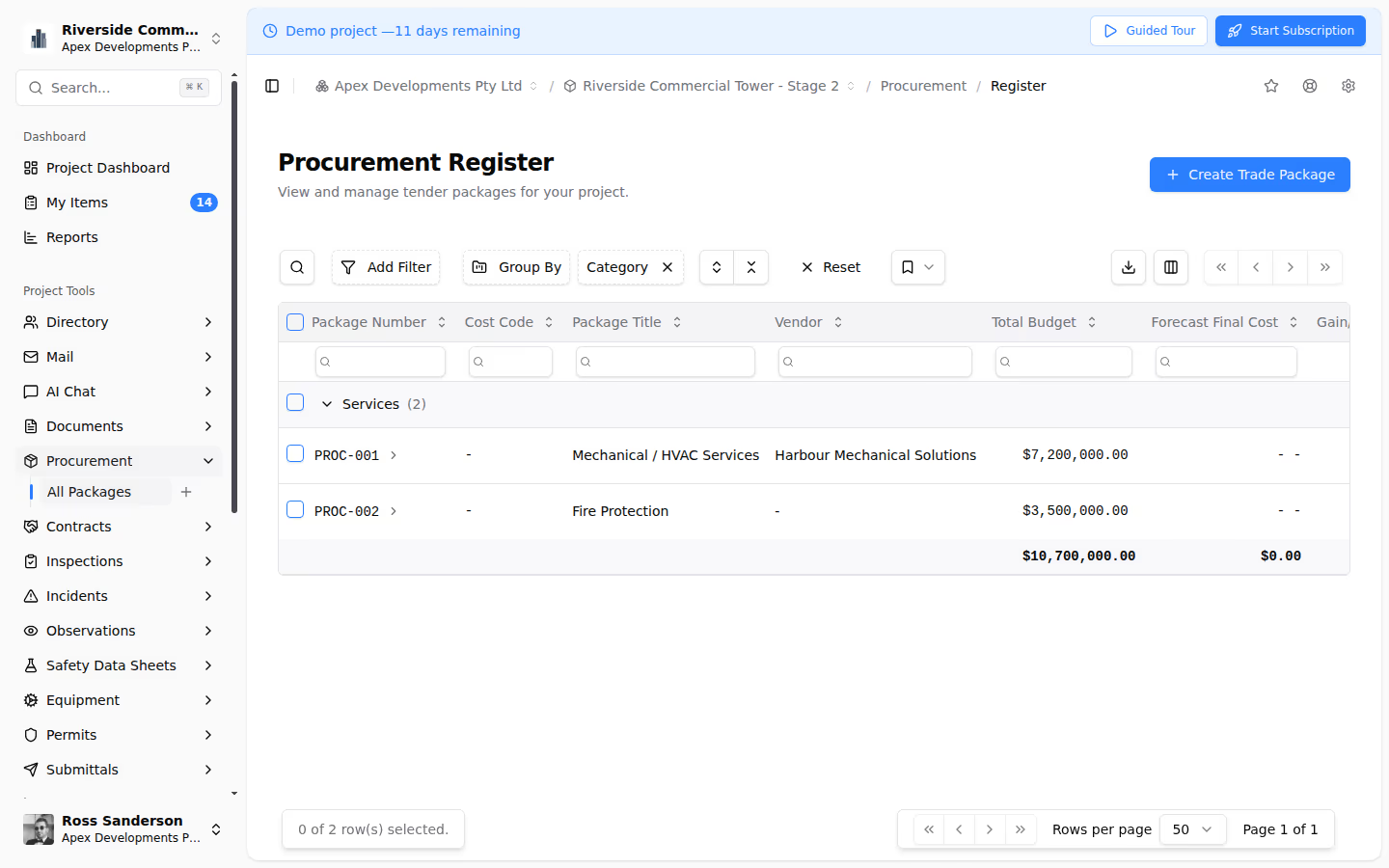
Teralo's Procurement module manages the complete tender lifecycle.
Package Management
Create procurement packages with clear scope definitions, budget allocations, and programme dates. The package register shows every package's current stage, from initial scoping through tender issue, evaluation, and award.
Tender Administration
Issue tenders through Teralo with all documentation attached. Tenderers can access documents, submit queries, and upload their submissions through the platform. All communication is logged and time-stamped, creating a transparent audit trail.
Supplier Coordination
Maintain a supplier database with prequalification status, trade categories, and performance history. When it is time to shortlist tenderers for a new package, filter by relevant criteria to build the tender list from pre-vetted firms.
Evaluation Support
Compare returned tenders side-by-side, tracking commercial and technical scores against your evaluation criteria. Document the evaluation process and rationale for selection to support governance and audit requirements.
Best Practices
- Be thorough in documentation: every hour spent making tender documents clear saves ten hours in claims and disputes later
- Allow adequate tender periods: rushed tenders produce poor submissions
- Evaluate more than price: the cheapest tender is often the most expensive project
- Manage queries transparently: share all information equally with all tenderers
- Debrief unsuccessful tenderers: it builds goodwill and improves future submissions
- Document the evaluation: record why you selected the successful tenderer in case the decision is challenged
Conclusion
A well-run tender process is the foundation of a successful construction contract. When managed through a structured platform like Teralo, every step from prequalification through award is documented, transparent, and auditable, reducing the risk of disputes and setting the project up for a productive working relationship between the parties.