What Are the Key Elements of an Effective Construction Program?
An effective construction program combines a realistic schedule with clear milestones, resource allocation, dependency mapping, and progress tracking mechanisms that keep all project stakeholders aligned. It serves as the single reference point for when activities will happen, who is responsible, and how delays in one area will cascade through the project.
What Is a Construction Program?
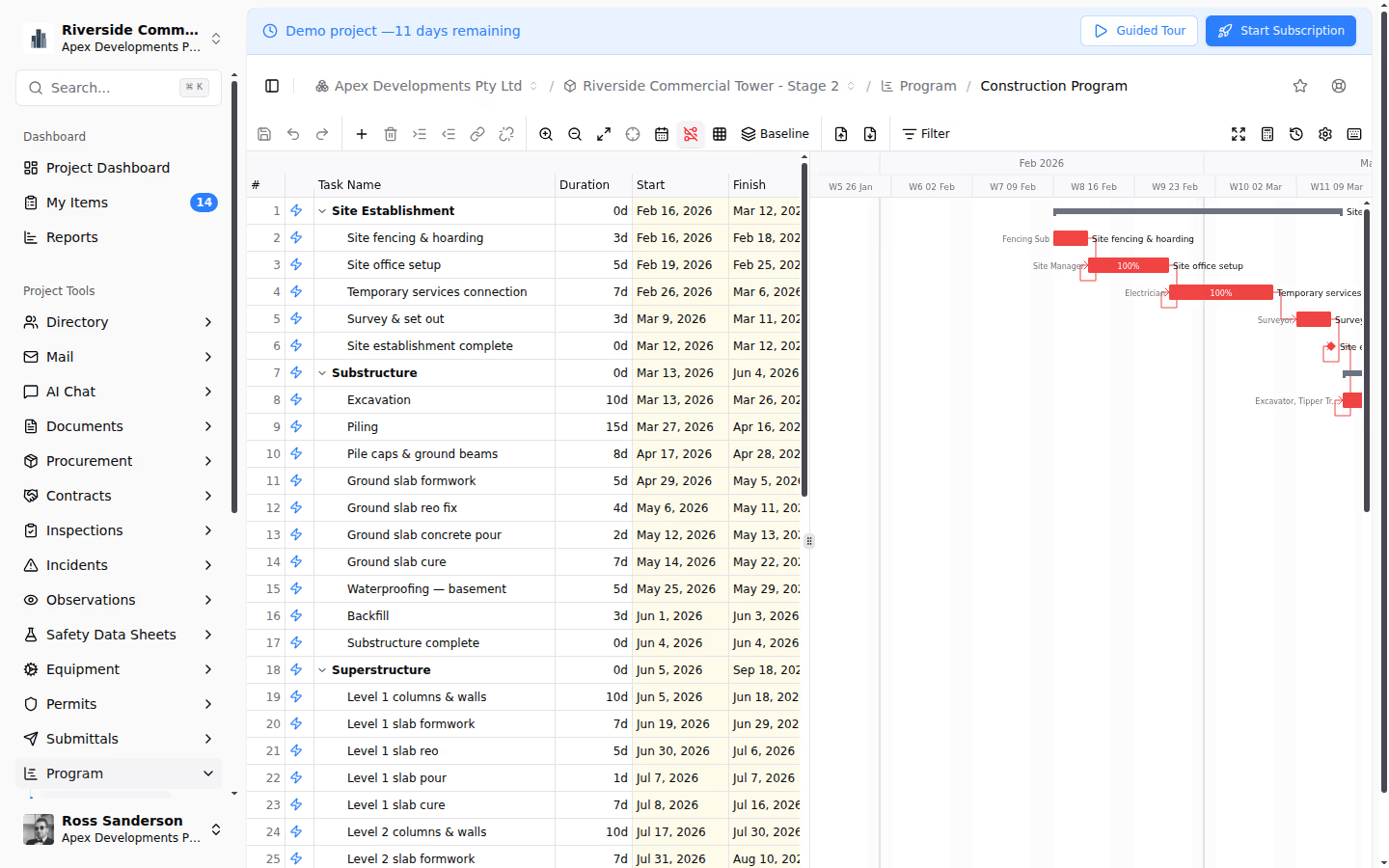
A construction program (also called a construction schedule or project programme) is the master timeline for a construction project. It defines the sequence and duration of all activities from mobilisation to practical completion, including design phases, procurement lead times, construction activities, commissioning, and handover.
The program is not a static document. It is a living plan that must be updated regularly to reflect actual progress, approved changes, and revised forecasts.
The Core Elements
1. Work Breakdown Structure
The foundation of any program is a clear breakdown of the project scope into manageable activities. The WBS organises work hierarchically:
- Level 1: Project phases (e.g., substructure, superstructure, fitout, commissioning)
- Level 2: Major work packages (e.g., foundations, structural frame, mechanical services)
- Level 3: Individual activities (e.g., pile caps zone A, first-floor slab pour, AHU installation)
Each activity should be specific enough to be assigned to a single responsible party, have a measurable deliverable, and have a realistic duration estimate.
2. Activity Sequencing and Dependencies
Activities must be linked by their logical relationships:
- Finish-to-Start (FS): the most common; activity B cannot start until activity A finishes (e.g., concrete curing before formwork stripping)
- Start-to-Start (SS): activity B can start when activity A starts (e.g., reinforcement fixing can begin on one section while excavation continues in another)
- Finish-to-Finish (FF): activity B cannot finish until activity A finishes
- Start-to-Finish (SF): rarely used in construction
Lead and lag times refine these relationships. A 7-day lag on a finish-to-start link between concrete pour and formwork stripping represents the curing period.
3. Critical Path
The critical path is the longest sequence of dependent activities that determines the minimum project duration. Any delay on a critical path activity directly delays the project completion date.
Understanding the critical path is essential because:
- It identifies which activities have zero float (no room for delay)
- It focuses management attention on the activities that matter most
- It provides the basis for acceleration strategies when the project falls behind
- It demonstrates to clients and stakeholders why certain activities cannot be delayed
4. Milestones
Milestones are zero-duration markers that represent significant project achievements:
- Contractual milestones: dates specified in the contract (e.g., building watertight by a specific date)
- Payment milestones: tied to progress claims and certification
- Regulatory milestones: inspection dates, permit approvals, occupancy certificates
- Internal milestones: targets set by the project team for planning purposes
Milestones provide clear targets for the team and early warning when the programme is drifting.
5. Resource Allocation
An effective programme must account for the resources needed to execute each activity:
- Labour: trade-specific headcounts by week or month
- Plant and equipment: crane hours, pump requirements, scaffold quantities
- Materials: procurement lead times, delivery schedules, storage requirements
- Subcontractor capacity: mobilisation dates, crew sizes, shift patterns
Resource levelling ensures that the programme does not inadvertently schedule more work than the available resources can handle.
6. Float and Contingency
Float (also called slack) is the amount of time an activity can be delayed without affecting the project completion date. Understanding float allows project managers to:
- Prioritise activities that are on or near the critical path
- Make informed decisions about resource reallocation
- Absorb minor delays without programme impact
- Identify activities where acceleration would be wasted effort
Contingency time (additional duration built into the programme for unforeseen events) should be managed transparently rather than hidden within individual activity durations.
7. Baseline and Progress Tracking
The approved programme becomes the baseline against which actual progress is measured. Effective progress tracking requires:
- Regular updates: typically weekly or fortnightly on active construction projects
- Actual start and finish dates: recorded for each activity as it is executed
- Percentage complete: for activities in progress
- Forecast dates: revised predictions for upcoming activities based on current performance
- Earned value metrics: comparing planned progress with actual progress and expenditure
8. Weather and External Factors
Construction programmes must account for:
- Weather windows: seasonal constraints on activities like earthworks, roofing, or external finishes
- Permit and approval timelines: regulatory review periods that are outside the contractor's control
- Third-party interfaces: utility connections, road closures, neighbouring property access
- Public holidays and site shutdowns: project-specific calendars reflecting the actual working days
How Teralo Supports Programme Management
Teralo's Intelligence module provides tools that complement your construction programme:
Project Dashboard
Teralo's configurable dashboard shows programme-related KPIs at a glance, including milestone status, activity completion rates, and schedule variance. Project managers can see whether the programme is on track without opening the scheduling software.
Bookings Integration
Resource bookings in Teralo's Site Operations module connect directly to programme activities. When a crane booking is made, it is visible alongside the programme schedule, ensuring resource allocation aligns with planned activities.
Daily Progress in Site Diary
The site diary captures daily progress records that feed back into programme tracking. When site supervisors record what was accomplished each day, this data can be compared against programmed activities to identify early signs of slippage.
Action Tracking from Meetings
Programme review meetings in Teralo generate action items that are tracked through to completion. When a meeting identifies a programme risk or recovery action, it does not get lost in minutes; it becomes a tracked commitment with an assignee and due date.
Common Programme Pitfalls
- Unrealistic durations: optimistic estimates that do not account for real-world conditions
- Missing dependencies: activities sequenced in parallel that actually need to be sequential
- Ignoring procurement lead times: scheduling installation activities without accounting for material delivery
- Infrequent updates: a programme that is only updated monthly quickly becomes fiction
- No resource levelling: scheduling more work than available crews can handle
- Hidden contingency: padding individual activities instead of managing contingency transparently
Conclusion
An effective construction programme is built on honest durations, clear dependencies, realistic resource assumptions, and regular progress tracking. When combined with a platform like Teralo that integrates daily site records, resource bookings, and meeting actions, the programme becomes a living management tool rather than a static bar chart.