Why Does Construction Need to Go Paperless with Mail and Correspondence?
Construction needs digital mail and correspondence because formal project communication, including RFIs, site instructions, notices, and general correspondence, must be traceable, auditable, and accessible to all relevant parties. Paper-based and email-driven correspondence systems create gaps in the audit trail, version confusion, and accountability failures that directly contribute to disputes and project delays.
The Problem with Current Correspondence Practices
Email Is Not a Document Management System
Most construction projects still manage formal correspondence through email. This creates fundamental problems:
- No single register: correspondence is scattered across individual inboxes with no central record
- No numbering control: there is no sequential numbering system to ensure completeness
- No status tracking: you cannot see whether an RFI has been answered, an instruction has been acknowledged, or a notice has been responded to within the contractual timeframe
- No threading: related correspondence (original, response, counter-response) is not linked, making it difficult to follow a conversation trail
- Access loss: when someone leaves the project, their email history goes with them
- Discovery costs: in a dispute, extracting and reviewing relevant correspondence from years of emails is enormously expensive
Paper Creates Gaps
Paper-based correspondence systems, still used on some projects, have additional weaknesses:
- Handwritten site instructions may be illegible or lost
- Filing systems depend on the diligence of the person filing
- Physical access is required to review records
- Copies degrade over time
- There is no backup if the site office is damaged
Why Formal Correspondence Matters Contractually
Construction contracts depend on formal communication for critical project events:
- Requests for Information (RFIs): seeking clarification on design or specification ambiguities
- Site instructions: directing the contractor to carry out work in a specific way
- Notices: formal notifications of delay, disruption, variation, or other contractual events
- Directions: superintendent or engineer directions under the contract
- Submissions: contractor proposals for materials, methods, or programme changes
Many of these communications trigger contractual timeframes. A notice of delay must be given within a specified number of days. An RFI must be responded to within a defined period. A site instruction must be acknowledged. If these communications are not tracked with dates and status, contractual rights can be lost.
What Digital Mail Management Looks Like
A purpose-built construction mail system differs from email in several fundamental ways:
Structured Mail Types
Rather than free-form emails, correspondence is categorised by type (RFI, site instruction, notice, general correspondence), each with its own numbering sequence, required fields, and status workflow. This structure ensures that nothing is miscategorised or lost.
Sequential Numbering
Every piece of correspondence receives a sequential number within its type (e.g., RFI-001, SI-042, GEN-107). This numbering is automatic and project-wide, eliminating gaps and duplicates.
Threading and Relationships
Responses to correspondence are linked to the original, creating a visible thread. When you open an RFI, you can see the original question, the response, any follow-up, and the final close-out, all in one view.
Status Workflows
Each correspondence type follows a defined workflow (e.g., Draft → Sent → Acknowledged → Responded → Closed). The system tracks the current status and flags items that are overdue.
Distribution Control
Correspondence is sent to defined recipients and distribution groups, with delivery confirmation. Everyone who needs to see a communication receives it, and the system records who accessed it and when.
How Teralo Manages Mail and Correspondence
Teralo's Mail module provides a complete digital correspondence management system designed specifically for construction projects.
Configurable Mail Types
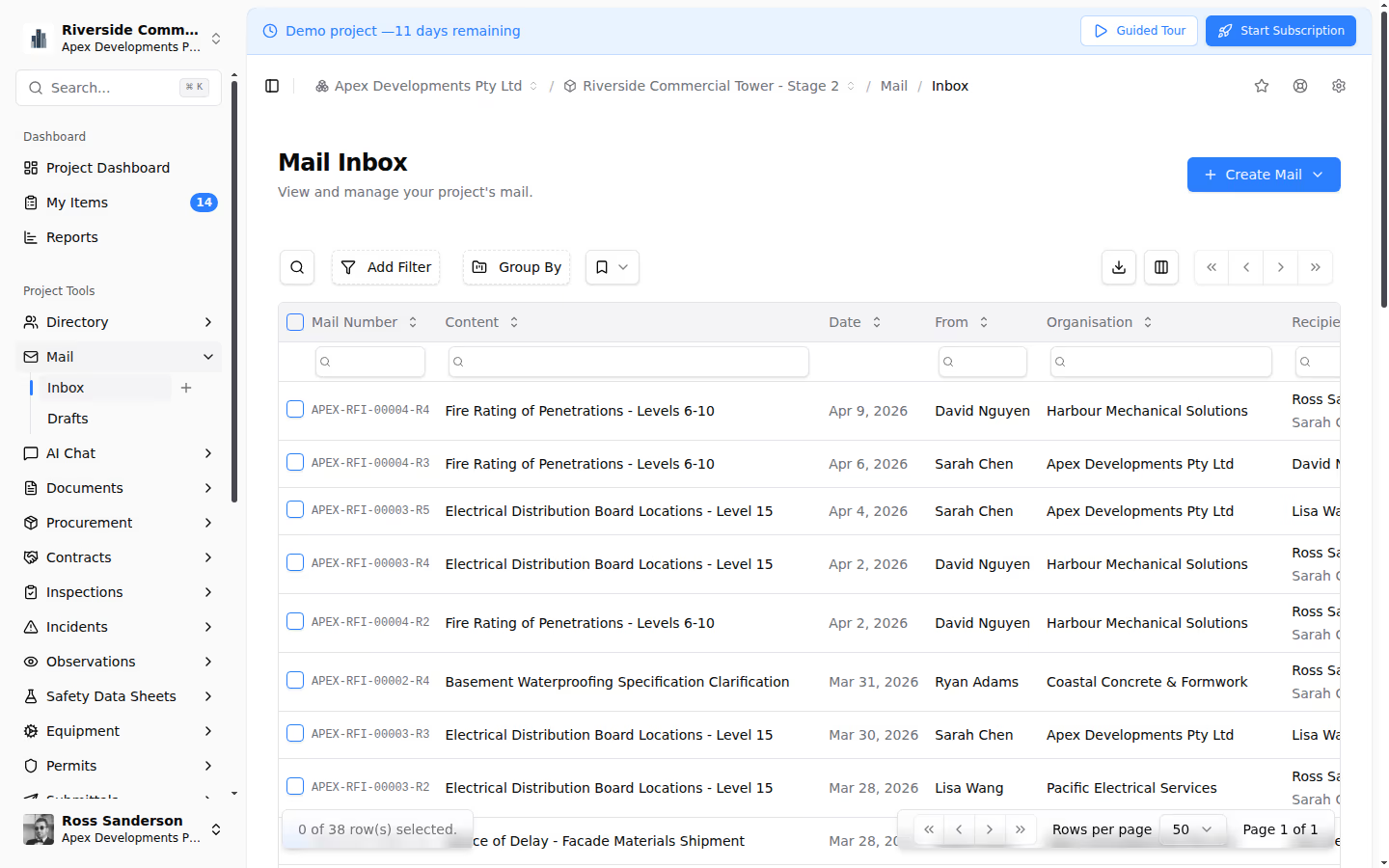
Define correspondence types tailored to your project: site instructions, RFIs, general correspondence, transmittals, and any custom types you need. Each type has its own sequential numbering, custom fields, and status workflow. Types can be activated or deactivated per project.
Threaded Correspondence
Track full mail trails with parent-child threading. When someone replies to a piece of correspondence, the reply is linked to the original. Configurable reply types (response, for information, action required) make the nature of each communication clear. The complete audit history shows every action taken on each item.
Rich Composition
Compose correspondence with a rich text editor that supports formatting, tables, and inline images. Attach files or reference other mail and documents within the system. Use distribution groups for quick addressing, reusable templates for common correspondence types, and multiple signatures for different signatories.
Central Register
Every piece of correspondence appears in a searchable register with filters for type, status, sender, recipient, date, and custom fields. The register provides the single source of truth for all project correspondence, with no more hunting through inboxes or filing cabinets.
Audit Trail
Teralo records every action on every correspondence item: creation, editing, sending, viewing, responding, and closing. This audit trail is invaluable during disputes, claims, and project close-out.
The Business Case for Digital Correspondence
The return on digital correspondence management comes from several sources:
- Dispute avoidance: complete audit trails reduce the likelihood and cost of disputes
- Time savings: finding a specific piece of correspondence takes seconds instead of hours
- Contractual protection: automated tracking ensures that notice periods and response deadlines are not missed
- Team efficiency: new team members can access the full correspondence history from day one
- Close-out acceleration: project handover documentation is already complete and organised
Best Practices
- Use the system for all formal correspondence: do not allow a parallel email channel for formal project communications
- Respond within contractual timeframes: use the status tracking to ensure nothing expires
- Reference related items: when correspondence relates to an earlier item, link them so the full context is always available
- Train all participants, including subcontractors and consultants; the system only works when everyone uses it
- Archive comprehensively: at project completion, export the full correspondence register and all attachments for long-term retention
Conclusion
Formal project correspondence is too important to be managed through email inboxes and paper files. A purpose-built digital correspondence platform like Teralo provides the structure, traceability, and accountability that construction projects demand, protecting your contractual position while making your team more efficient.