How Does Teralo Mail Transform Construction Correspondence?
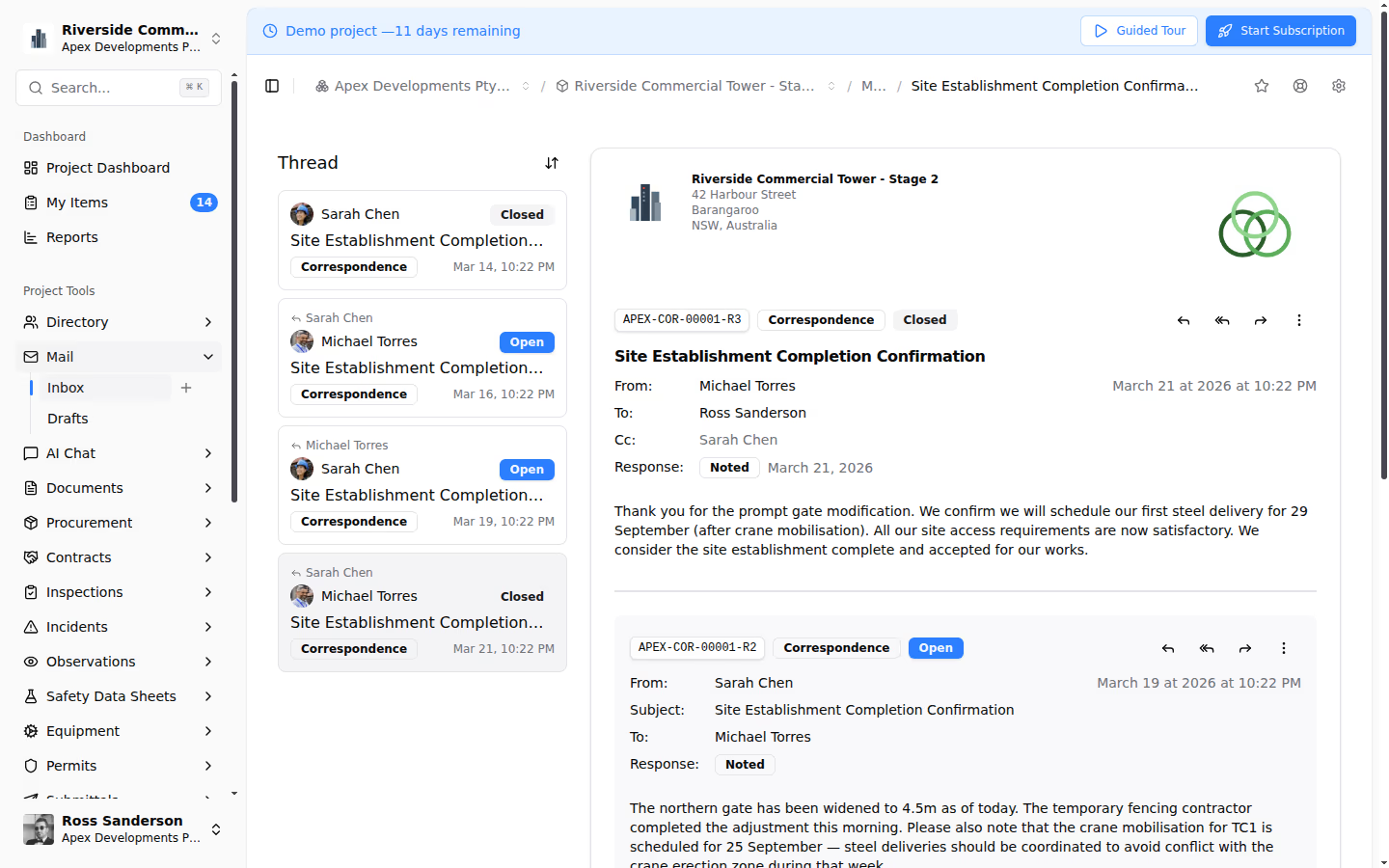
Teralo Mail transforms construction correspondence by replacing scattered emails and paper-based letters with a structured, numbered, and auditable digital system where every piece of project communication is registered, threaded, tracked through status workflows, and accessible to the entire project team. It treats correspondence as a formal project record, not just messaging.
The Problem Teralo Mail Solves
Formal project correspondence (RFIs, site instructions, notices, transmittals, and general letters) has contractual significance. An RFI that goes unanswered past the contractual response period can create delay entitlements. A site instruction that is not formally acknowledged can be disputed later. A notice that is not demonstrably delivered may be invalid.
Despite this importance, most construction projects manage correspondence through email, a tool designed for personal messaging, not formal project communication. Email gives you no numbering system, no status tracking, no threading between related items, no central register, and no audit trail that survives personnel changes.
How Teralo Mail Works
Configurable Mail Types
Every project can define its own correspondence types based on project requirements. Common types include:
- General Correspondence: standard project letters and communications
- RFI (Request for Information): queries seeking clarification on design, specification, or contractual matters
- Site Instructions: directions to the contractor regarding how work should be executed
- Notices: formal contractual notifications (delay notices, variation notices, defect notices)
- Transmittals: formal document distribution records linked to the Documents module
Each mail type has its own sequential numbering (RFI-001, RFI-002, SI-001, SI-002), custom fields relevant to that type, and its own status workflow. Types can be activated or deactivated per project, so each project only sees the correspondence types it actually uses.
Threaded Correspondence
Teralo links related correspondence through parent-child threading. When someone responds to an RFI, the response is linked to the original question, creating a visible conversation trail. When a follow-up is needed, it links to the previous thread.
Reply types are configurable: a response to an RFI might be "Response," "For Information," or "Action Required," making the nature of each communication clear without reading the full content.
The threading means you can open any piece of correspondence and immediately see its full history: the original, every response, every follow-up, and the current status. No searching through inboxes, no reconstructing conversations from forwarded email chains.
Rich Composition
The composition interface provides:
- Rich text editor: formatting, tables, and inline images for professional correspondence
- File attachments: attach files directly to correspondence, or reference documents and other mail already in the system
- Distribution groups: named groups of recipients scoped to each project, so "Design Team" sends to all relevant people without selecting them individually
- Templates: reusable templates for common correspondence types, ensuring consistency across the project
- Multiple signatures: configure different signatures for different signatories within your organisation
Status Workflows
Every correspondence item moves through defined status stages:
- Draft: under preparation, not yet sent
- Sent: issued to recipients
- Acknowledged: recipients have confirmed receipt
- Responded: a formal response has been provided
- Closed: the matter is resolved
The register clearly shows which items are awaiting response, which are overdue, and which are closed. This visibility is impossible to achieve with email.
Central Register
All correspondence appears in a searchable register with filters for type, status, sender, recipient, date, and custom fields. The register provides:
- A complete record of all project correspondence
- Quick filtering to find specific items
- Export capabilities for reporting and archiving
- The single source of truth for formal project communications
Audit Trail
Every action on every correspondence item is recorded: creation, editing, sending, viewing, responding, and closing. The audit trail shows who did what and when, creating an unassailable record for dispute resolution, claims, and project close-out.
Real-World Impact
Contractual Protection
When a delay occurs and the parties disagree about who was notified and when, the mail register provides definitive evidence. Every notice was numbered, dated, distributed to defined recipients, and acknowledged (or not). There is no ambiguity.
Response Time Management
The status workflow highlights correspondence awaiting response. When an RFI has been open for 10 days against a 14-day contractual response period, the system flags it, giving the recipient time to respond and the sender evidence of when the clock started.
Team Transitions
When a project manager or contract administrator changes, the new person inherits the complete correspondence history instantly. There is no knowledge loss, no request to forward old emails, no missing context.
Project Close-Out
At practical completion, the correspondence register is a complete, organised archive of every formal communication on the project. This is invaluable for final account negotiations, defect liability management, and building lifecycle documentation.
Integration with Other Teralo Modules
Teralo Mail does not operate in isolation:
- Documents: transmittals in the mail system link to documents in the Document Register, creating a formal distribution record
- Contracts: contractual notices and variations originating from correspondence link to the contract management module
- Quality: submittal transmittals connect the quality management workflow to the correspondence record
- Site Operations: instructions and directions link to the site diary record for that day
Conclusion
Teralo Mail replaces the chaos of email-based project correspondence with a structured, numbered, threaded, and auditable system designed specifically for construction. Every piece of formal communication is registered, tracked, and preserved, protecting your contractual position while making your team more efficient.